


A mandate for change and a monumental test for Ukraine’s new military chief

By MARC SANTORA
On May 9, 2014, a 13-ton armored vehicle tore through pro-Russian barricades in Mariupol, launching a young battalion commander into Ukrainian legend as a symbol of raw, improvisational resistance.
Today, that soldier, Maj. Gen. Mykhailo Drapatyi, assumes command of Ukraine’s armed forces in a fraught moment of military and political transition, leading his country in a battle that could have scarcely been imagined a decade ago.
It is a war both of grinding attrition and high-tech innovation, in which survival is dictated by which side can adapt faster and better integrate ever-evolving weapons into the daily slog of fighting under skies saturated with drones.
Drapatyi, 43, who was appointed the top military commander by President Volodymyr Zelenskyy on Tuesday night, replaced 60-year-old Gen. Oleksandr Syrskyi. Drapatyi represents a newer generation of post-Soviet military leadership in Ukraine that has embraced more modern approaches to warfighting.
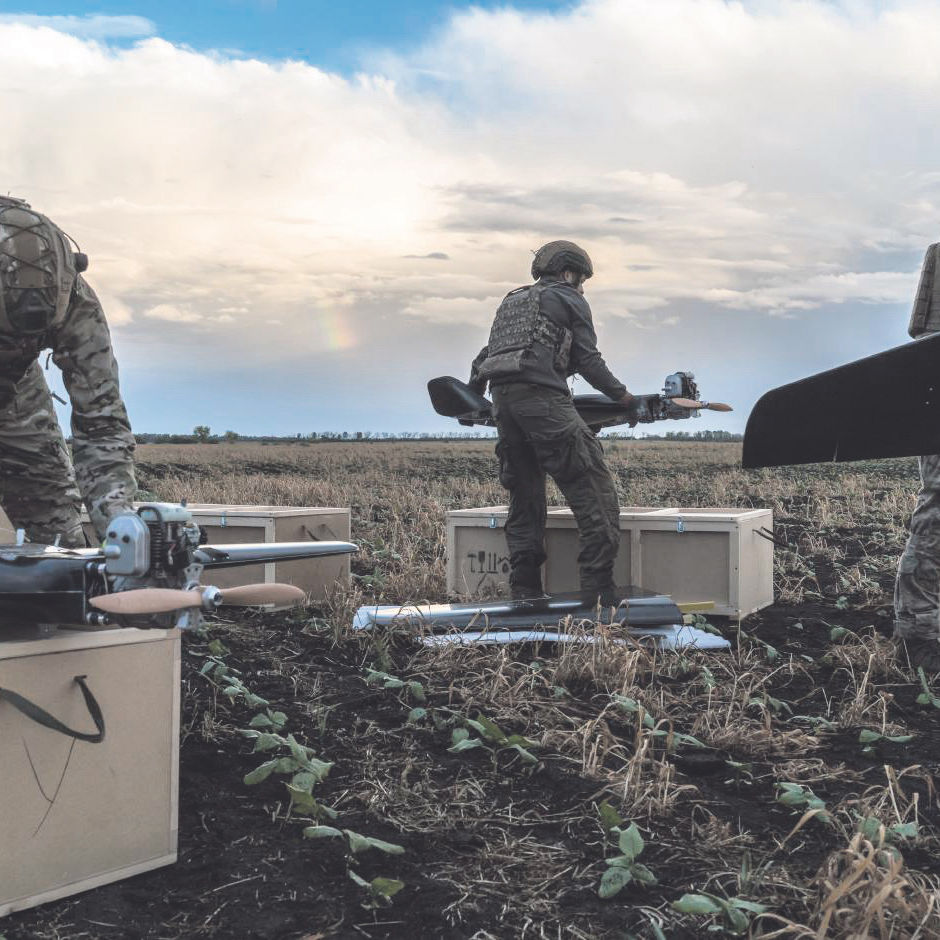
He is one of the key architects of Ukraine’s “drone line” strategy. Instead of relying purely on static trenches holding vulnerable infantry troops, Ukraine created a continuous “kill zone” behind the front line filled with attack and reconnaissance drones and automated turrets.
That tactic has helped slow Russian advances, allowing Ukraine to take the initiative along parts of the front for the first time in years. It has also given hope to a war-weary nation that has lost tens of thousands of soldiers.
While recent battlefield developments have been positive, especially with long-range strikes in Russia and Crimea, analysts warned that Ukraine must ensure a smooth handover in the military leadership to maintain momentum.
The challenge is heightened by the circumstances of Syrskyi’s dismissal. Ukraine has been engulfed in turmoil since Zelenskyy fired his reform-minded defense minister, Mykhailo Fedorov, last week. Fedorov, 35, had clashed with Syrskyi over strategy, including how far to go in relying on drones and robots.
Demonstrators took to the streets to protest Zelenskyy’s decision to side with Syrskyi. Over six days, the crowds moved from calling for Fedorov’s reinstatement to demanding Syrskyi’s removal. Zelenskyy granted that wish Tuesday night, replacing Syrskyi with Drapatyi, who had endorsed Fedorov and his vision of modern warfare.
Drapatyi steps into a matrix of crises. He must address problems with Ukraine’s recruitment system while also bracing for a possible renewed Russian mobilization effort. He must shield energy grids from a winter strike campaign even as Ukraine’s most sophisticated air defenses run low on ammunition. And he must blunt Russia’s slow and bloody campaign to level the remaining bastions of defense in the Donbas region of eastern Ukraine.
Zelenskyy’s firing of Fedorov also exposed a rift between the armed forces and the Defense Ministry over management of the war effort, which the military’s new leadership will have to navigate.
For Drapatyi, dealing with the president’s office will require a balancing act, analysts said. He will be pulled, they said, between asserting the operational independence favored by military reformers and accommodating Zelenskyy’s tendency toward direct battlefield management.
Syrskyi’s willingness to comply with executive directives made him a predictable partner for Zelenskyy. Drapatyi, by contrast, is taking over with backing from a reformist movement demanding a departure from rigid, top-down command.
Valerii Zaluzhnyi, a former top commander of Ukrainian forces who was fired by Zelenskyy in 2024 after the two clashed over mobilization efforts and counteroffensive strategy, said in a statement that the task ahead of Drapatyi was “much harder than he imagines.”
Taras Chmut, a prominent Ukrainian military analyst, said that the real fight in Kyiv, the capital, was over defense procurement: what Ukraine buys for the army with its own money and with partners’ money, and which powerful defense contractors might lose income in the process.
Drapatyi, analysts said, will have only limited influence over those decisions and over the efforts that Fedorov had started to address corruption and purchase more modern weapons, like drones.
Liudmyla Buimister, an independent lawmaker who is a former special forces commander and still serves in the military, said she expected Drapatyi to change the culture of the high command, stop the practice of micromanaging battlefield decisions and bring more coherence to the deployment of forces.
Drapatyi is expected to champion many of the same technology-driven initiatives that Fedorov was pushing.
Jack Watling, an analyst at the Royal United Services Institute in London, wrote in an online commentary that, with the change at the top, Fedorov’s push for a data-driven approach to improve the military’s performance might now be possible.
Drapatyi is also expected to empower commanders to make real-time decisions based on battlefield conditions. Under Syrskyi, junior commanders bristled at what they viewed as micromanagement, with the General Staff needing to sign off before shifting tactics or withdrawing troops from compromised positions.
Syrskyi gained a reputation for tolerating high numbers of casualties in holding such positions or conducting assaults, though he maintained that protecting soldiers was his priority.
With the recruitment shortfall, Drapatyi, like Fedorov, is believed to see problems in internal processing, training flaws and corruption as primary factors, not a shortage of available men. Ukraine’s hope is that a change in culture in the high command will increase motivation to join the military.


