Deluged with mail ballots, California takes its time counting votes again


By LAUREL ROSENHALL, JILL COWAN and LIVIA ALBECK-RIPKA
Four days after the primary election in California, officials have tallied only about two-thirds of the votes cast, and the races for California governor and Los Angeles mayor remain unresolved.
It can be confounding to Americans elsewhere and has made the Democratic-run state vulnerable to unfounded Republican accusations of fraud.
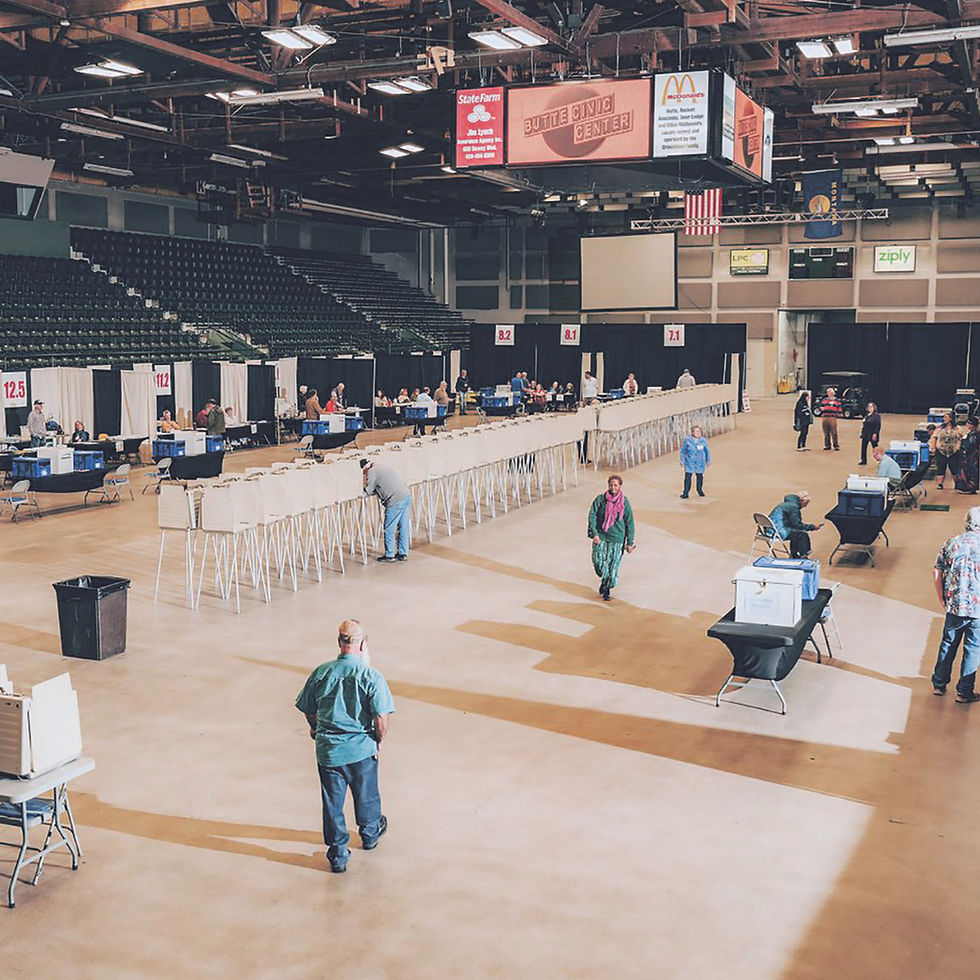
The reasons for California’s slow count are explained after each election. California relies heavily on mail balloting, which slows the tally because of the work involved to check signatures, open envelopes and inspect ballots before counting them. The state’s leaders take pride in a deliberate process meant to make voting easy while keeping elections secure.
And when voters wait until the final days to submit or send their ballots, as was the case this year, they deluge elections offices with envelopes that must be handled with care.
“It creates what we call the ‘pig-in-the-python’ effect,” Kim Alexander, president of the nonpartisan California Voter Foundation, said of the huge volume of vote-by-mail ballots received on Election Day.
But other states that have a lot of mail voting, such as Colorado, Arizona and Washington, seem to have figured out how to securely process ballots and get faster results. Why can’t California count faster?
Different county offices work on different schedules, depending on their staffing or labor agreements. Only five of the 58 counties plan to update vote totals this weekend. Most offices lack the resources to keep staff members on constant rotation, Alexander said.
In California, each county decides how much to spend on election operations, creating major differences in their capacity to count ballots, said Ben Gips, who works on state voting policy for Protect Democracy.
Large counties such as Los Angeles and Orange have invested in equipment and staffing that typically allow them to finish counting more than 90% of ballots within a week of an election. Other counties can take three or four weeks.
“Basically, the counties have been trying to fill in for the sort of absent role of the state,” Gips said, “and some counties are more able to do that than others.”
The key areas that require funding are not only staffing and equipment but space to accommodate workers and observers and to securely store ballots. In Yolo County, California, west of Sacramento, election officials knocked out a wall in their building a few years ago to make space to process the growing number of ballots, said Jesse Salinas, the county’s registrar of voters.
“We are at capacity,” he said. “I don’t have any empty space.”
Salinas, who is also the president of the California Association of Clerks and Election Officials, said that more than 50% of the ballots in his county were either postmarked or dropped off in person on Election Day this year. He described a whirring processing center operated by 25 to 30 staff members, all of them scanning, opening and sorting ballots as quickly as possible.
The office has two envelope-sorting machines that cost $250,000 each.
“Local elected officials are doing everything they can,” he said. “If I had more space and more equipment and more staffing — it’s a resource issue — if I had all that stuff, then it could happen faster,” he said.
In Maricopa County, Arizona, one of the nation’s largest voting jurisdictions, roughly 762,000 mail-in ballots were returned in the August 2022 primary, according to Stephen Richer, who was the top elections official there at the time.
By 12:40 a.m. the day after election night, his office had counted about 82% of the votes. And as a rule, he said, the office tried to have counted 95% of the ballots within 72 hours after polls closed.
“Throwing money and space at it does help the problem, but it doesn’t solve all the problems,” Richer said.
Perhaps the biggest factor, he suggested, is a lack of will among leaders in states such as California to sacrifice accessibility for speed. He empathized with election officials who could face allegations of cutting corners if they counted too fast but suspicions of fraud if they counted too slowly.
California’s top elections official, Secretary of State Shirley Weber, has made it clear at each election that she wants counties to take the time to get it right.
“Accuracy comes before speed,” she said in a statement. “California is the nation’s largest voting state, with millions of ballots to process and count. Taking the time to do this work correctly protects voters’ rights and ensures the integrity of our elections.”
Richer, now a legal scholar with the Cato Institute and a senior fellow at the Harvard Kennedy School, said California’s commitment to making it easy and painless for Californians to vote was laudable. But in an environment where President Donald Trump and his supporters are questioning election integrity, state leaders should have better prepared to face questions.
“We saw this train barreling down on us for a while now, and the governor and the state Legislature did nothing about it,” he said. “If the only thing you care about is having 22 days to cure a signature on a mail-in ballot, these are the consequences you live with.”
Trump, who has a history of stoking unfounded election conspiracy theories, said this past week that the prolonged vote-counting in California was proof that “they’re rigging the election.”
“They still aren’t even close to telling you who won,” he said Friday while speaking at an event in Wisconsin.
The federal Department of Justice sent an assistant U.S. attorney to a ballot processing center in Los Angeles on Friday to observe the counting. And Bill Essayli, the first assistant U.S. attorney in Los Angeles, said on social platform X that his office “has multiple election fraud investigations underway,” though he did not provide specifics.
Richer warned that the primary election was merely a preview of what was to come. It is not clear that much would change in California before the general election.
“If you think this is bad, just wait until control of the United States House is in play in November,” he said. “And it comes down to a number of competitive jurisdictions in California.”