


Electrical workers union: PR has resources to return power grid to public control

By THE STAR STAFF
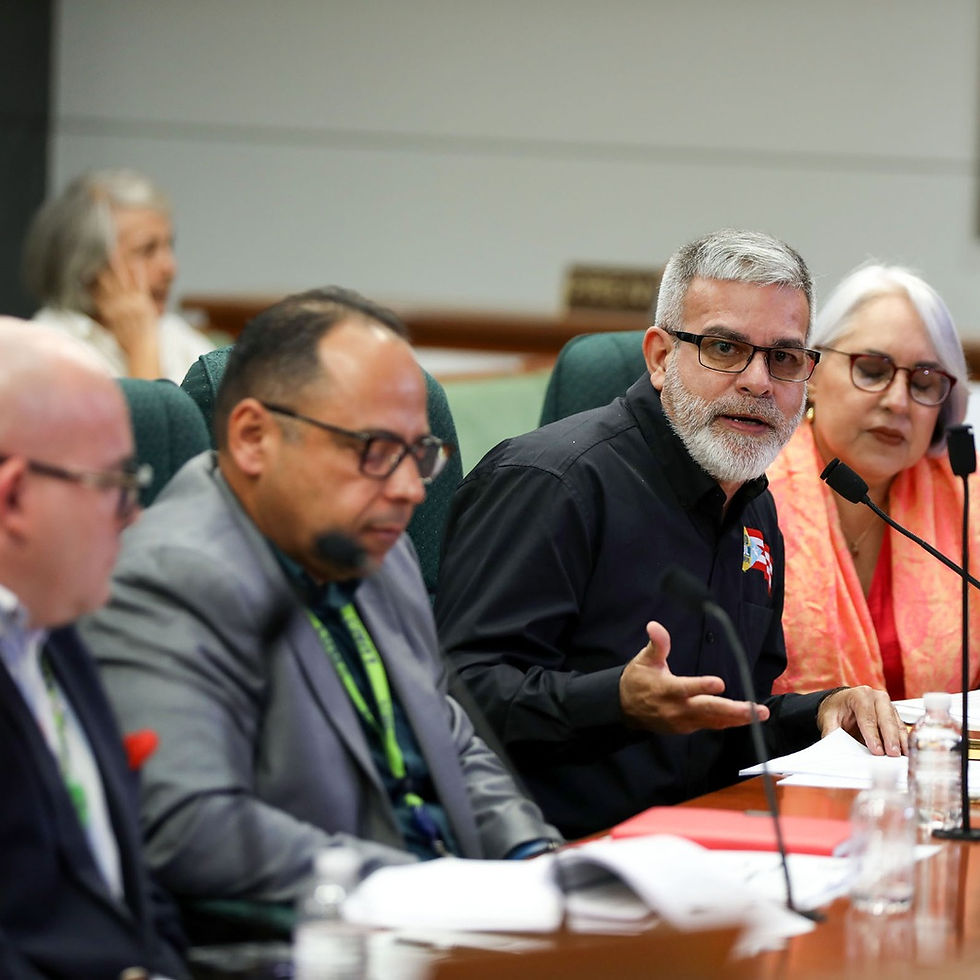
Puerto Rico has the personnel, assets and technical expertise needed to bring the island’s electric power transmission and distribution system back under public management if the contract with grid operator LUMA Energy ends, said Ángel Figueroa Jaramillo, president of the Electrical Industry and Irrigation Workers Union (UTIER by its acronym in Spanish).
Figueroa Jaramillo argued in a radio interview that replacing LUMA with another private operator would replicate the same problems he says have plagued the system for the past five years -- high costs, workforce instability and the erosion of institutional knowledge.
“Returning to another private operator would lead to the same failure we are seeing today,” he said, adding that a public takeover could save roughly $140 million annually, which he estimated as equivalent to about one cent per kilowatt-hour. He also maintained that a public model would preserve technical expertise and provide greater stability for workers.
His comments come as the Puerto Rico Electric Power Authority (PREPA) and the Public-Private Partnerships Authority ask the Puerto Rico Supreme Court to invalidate the contractual extension that allows LUMA to continue operating the grid on a provisional basis. The government’s petition also outlines a transition period of up to 12 months.
Although Figueroa Jaramillo acknowledged that PREPA was dismantled during the privatization process, he insisted that the components needed to rebuild the operation still exist. His proposal includes retaining LUMA employees with technical experience, reinstating more than 1,000 PREPA workers reassigned to other agencies, and allowing retired personnel to return temporarily to support the transition.
He stressed that returning the grid to PREPA should not mean restoring the old governance model. Instead, he called for structural reforms to prevent political interference and correct longstanding administrative failures.
Figueroa Jaramillo also warned that public campaigns will likely attempt to portray PREPA’s bankruptcy as an obstacle to public control of the grid. He countered that many entities have reorganized through bankruptcy and argued that the process should not be used to dismiss the possibility of a public operator.
During the interview, he criticized Genera PR’s management of the PREPA’s power generation assets, claiming available generation capacity has fallen from about 3,832 megawatts in 2023 to under 3,200 megawatts. He cited the prolonged outage of a unit at the Aguirre power plant in Salinas and delays in installing temporary generation.
The UTIER president also addressed the controversy surrounding the canceled contract with Power Expectations, saying the public performance of Energy Czar Josué Colón Ortiz “was not the best” and calling for investigations into any contradictions, irregularities or conflicts of interest. He said former PREPA Executive Director Mary Carmen Zapata Acosta and the utility’s governing board must explain how the contract was evaluated and approved. While he described Zapata as serious and honest, he said she should clarify whether she was pressured or misled.
Figueroa Jaramillo urged commonwealth and federal authorities to deliver results and determine responsibility for all officials and entities involved.
“What cannot happen is for this to remain in a vacuum,” he said. “There have to be consequences.”
If the island Supreme Court invalidates LUMA’s agreement and no private operator emerges, or proposed alternatives prove too costly, experts warn the government may have no choice but to resume control of transmission and distribution. Although PREPA still owns the grid’s physical assets, it currently lacks the workforce to operate them and would need to rebuild its operational capacity.
LUMA argues that the government is pushing for change without presenting a viable alternative and warns that canceling the contract would jeopardize service stability and undermine confidence in public-private partnerships.


Comments