


Energy czar: Electrical grid has reached saturation due to unregulated growth of rooftop solar


By THE STAR STAFF
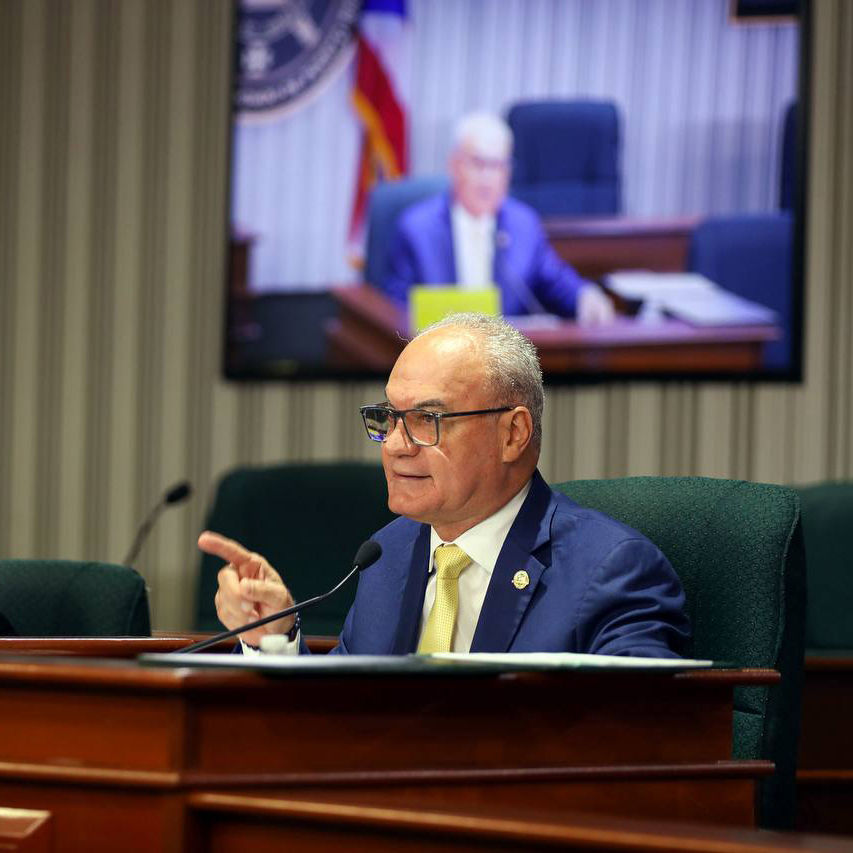
Puerto Rico Energy Czar Josué Colón Ortiz warned Wednesday that the island’s electrical grid has reached a critical saturation point due to the explosive, largely unregulated growth of rooftop solar systems, arguing that the unchecked proliferation is destabilizing voltage, triggering load‑shedding events, and forcing legacy power plants into inefficient and costly operating patterns.
His remarks were delivered in a 20‑page filing titled “Comments on the Proposed Rules for Interconnection of Generation Facilities and Microgrids,” submitted to the Puerto Rico Energy Bureau (PREB) as part of the rulemaking process for a new interconnection regulation.
Colón said the data shows a system pushed beyond its physical limits.
“More than 80% of the feeders where distributed generation has been developed exceed the 15% penetration limit,” he wrote, adding that 35% of feeders are now operating above 70% capacity. He described the grid as “over‑saturated with renewable resources,” a condition he argues is directly tied to rising instability across the transmission and distribution system.
He also placed responsibility on grid operator LUMA Energy for failing to conduct the supplemental studies required under Puerto Rico’s expedited interconnection law.
“The mechanisms designed to detect the harmful effects of uncontrolled proliferation have not been implemented,” Colón said. As a result, he argued, the island has adopted a “connect first, study later” model that has left the grid “more fragile and less stable.”
Colón cited operational data showing that 94% of load‑shedding events caused by variable generation stem from rooftop solar systems, with each incident disconnecting between 130 and 140 megawatts. He also warned that older inverters installed before 2018 are automatically dropping offline during frequency dips, causing an additional sudden loss of roughly 100 megawatts -- “the equivalent of losing the San Juan 7 unit,” he noted.
The energy czar said the cumulative effect is a daytime grid that swings sharply, forcing the Puerto Rico Electric Power Authority’s thermal units to operate at low output levels where they are inefficient and unable to provide adequate frequency control.
“This reduces the reliability and protection mechanisms of the system,” he wrote, adding that the afternoon ramp‑up when solar generation fades is creating thermal stress and accelerating equipment failures.
Colón urged the PREB to reverse the current interconnection model and require full studies before approving any new solar system, including those under 25 kilowatts.
“It is imperative that interconnection processes return to their natural order,” he said. “No distributed generator should be interconnected until the operator determines that the interconnection is safe and will not affect the reliability, security, and stability of the electric system.”
He also called for developers -- not ratepayers -- to bear the full cost of interconnection studies and any grid upgrades required to accommodate new solar installations.
“There is no justification for companies selling these products for tens of thousands of dollars not to assume the cost of the studies necessary to guarantee system stability,” he wrote.
Colón’s filing signals a significant policy shift: a push for stricter controls on distributed solar, mandatory upgrades to older inverters, and the authority to curtail excess solar generation without compensation.


This is a really important discussion on grid reliability and modernizing power infrastructure. Rapid adoption of renewable energy is obviously crucial, but without proper grid management and regulatory updates, balance issues can easily create bottlenecks for the main distribution system.
I was actually looking into power grid load forecasting and demand response models last term, and I ended up getting some Machine Learning Project Help to help structure the predictive time-series data. Seeing how data models predict load spikes makes you realize just how complex it is for grid operators to balance decentralized solar input with overall system stability. Thanks for covering such a critical issue
The federally funded project involves a $767 million investment.
Puerto Rico Gov. Jenniffer González-Colón announced the signing of a contract between Genera PR and Tesla for the acquisition of 430 megawatts (MW) in Tesla Megapack systems, a project aimed at improving the reliability and resilience of the island’s electrical grid.Josué Colón, Puerto Rico’s energy czar, confirmed this as the largest battery project currently under development in the U.S., according to Tesla.
On 19 May 2025, three stakeholders submitted comments regarding the CBES+ proposal: Solar United Neighbors, the Puerto Rico Solar Energy Industries Association DBA Solar and Energy Storage Association of Puerto Rico (SESA), and joint comments from Sunrun, Tesla, and Sunnova, which are jointly referred to as “the Aggregators”.
On 1 April 2026, “the Aggregators” submitted a joint motion to authorise the additional auto-enrollment of batteries in the CBES programme, effectively an aggregated virtual power plant (VPP), for summer 2026.
Kyle Wallace, senior director of public policy at Sunrun, explained on LinkedIn, “Facing major capacity shortfalls last year, PREB turned to the 170,000+ home solar+storage systems on the island to help keep the lights on. The CBES programme existed, but up…
https://www.energy-storage.news/puerto-rico-approves-aggregated-residential-energy-storage-motion-from-tesla-sunrun-and-sunstrong/
https://grist.org/solutions/puerto-rico-virtual-power-plant/