


Firms submit evidence to Senate alleging DNER official misled lawmakers on landfill expansion

By THE STAR STAFF
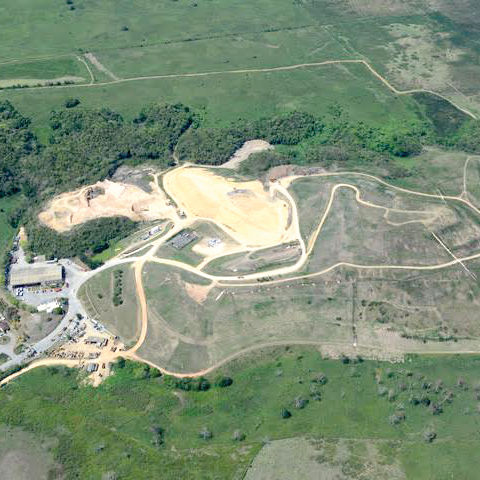
Two companies opposing the expansion of the Carolina municipal landfill have submitted evidence to a Senate committee alleging that a Department of Natural and Environmental Resources (DNER) official provided misleading information to lawmakers investigating the facility’s permit renewal and expansion.
Hacienda Campo Rico and Caribbean Golf Academy filed a 28-page memorandum at the request of the Senate Committee on Tourism, Natural Resources and Environmental Affairs, which is investigating the landfill’s operations and proposed expansion.
According to the filing, Pedro Guevara, director of the Permits Division within the DNER’s Compliance Office, made inconsistent and unsupported statements during Senate hearings regarding the landfill’s footprint, environmental oversight and permitting process.
Luis Rivera Ortiz, president of both companies, said Guevara has offered conflicting accounts about whether the landfill expanded beyond its authorized footprint and whether a portion of the expansion occurred in land previously affected by quarrying activity.
“The testimonies offered by some DNER officials do not conform to the permitting history and operational record of the Carolina landfill,” Rivera Ortiz stated in the memorandum.
The companies contend that Cell C’s expansion encroaches on a 34-acre (35-cuerda) buffer zone that should remain protected due to its ecological significance within the Special Planning Area of the Piñones State Forest. They argue the area is also protected under Puerto Rico’s Karst Law and other natural resource and historic preservation statutes.
Rivera Ortiz further argued that extending the landfill’s footprint through a permit renewal process, as has been proposed, is not permitted under existing regulations and would instead require a process that includes the preparation of an Environmental Impact Statement.
Questions over landfill boundaries
A central issue raised in the memorandum concerns the absence of precise documentation establishing the boundaries of the landfill’s expansion area.
Rivera Ortiz said government agencies and the Municipality of Carolina have not conducted reliable land surveys to confirm whether the facility remains within authorized limits. He disputed testimony from Guevara that the landfill has not exceeded its approved footprint, noting that lawmakers have not been provided with the aerial photographs cited by the official.
The memorandum cites sworn testimony from the director of the Municipality of Carolina’s Environmental Affairs Department, who stated in May 2024 that the municipality was unaware of any document identifying the boundaries or coordinates of Cell C. It also references testimony from the president of Landfill Gas Technologies LLC stating that the company did not possess or produce plans or documents containing Cell C’s coordinates.
Rivera Ortiz said construction plans filed with regulatory agencies likewise lack survey information. He also pointed to a July 2025 explanatory memorandum issued by the DNER indicating that the agency had requested title studies and surveys from the Municipality of Carolina to clearly define the facility’s boundaries.
The businessman said conflicting statements have also emerged regarding the size of the landfill expansion, with estimates ranging from 4.9 to 9.7 acres (five to 10 cuerdas), as well as 7.43 acres (7.65 cuerdas). He additionally criticized what he described as contradictory testimony regarding the authorized duration of the landfill’s operations.
The memorandum also challenges the DNER’s assertions regarding environmental oversight.
Rivera Ortiz said agency officials have testified that quarterly inspections are conducted at the landfill, but only four inspection reports have been presented to the Senate. He urged lawmakers to require production of the complete inspection record dating back to 2019.
Regarding pollution concerns, he said there is documented evidence, including records from government agencies, of leachate spills at the Carolina landfill.
He also questioned groundwater monitoring practices, arguing that the administrative record contains evidence of only a single groundwater sampling event from April 2022. According to the memorandum, arsenic was detected in one monitoring well and its duplicate sample at concentrations of 0.0220 and 0.0216 milligrams per liter.
Rivera Ortiz said the record does not include evidence of additional groundwater monitoring events between 2018 and 2021, nor for 2023, 2024 or 2025. He also asserted that no groundwater sampling results appear in the record following leachate releases reported in June 2024 and that no leachate sampling results have been produced.
Rivera Ortiz also accused the DNER of applying environmental protections inconsistently. He argued that the agency has recently denied construction projects in karst regions elsewhere in Puerto Rico while defending what he characterized as an unlawful landfill expansion into a karst area in Carolina.
Despite his objections, Rivera Ortiz reiterated that he is not opposed to the landfill’s continued operation so long as it complies with applicable laws and regulations. His opposition, he said, is directed specifically at the proposed expansion into the buffer zone. He described the expansion as environmentally sensitive and harmful to the area’s ecotourism economy.
The Senate panel’s investigation into the Carolina landfill remains ongoing.


