House approves bill repealing minimum wage commission

By THE STAR STAFF
The island House of Representatives approved legislation Monday that would dismantle the independent Minimum Wage Evaluation Commission and return full authority over minimum wage policy to the elected Legislature, marking a significant reversal of the framework established in 2021.
The measure, House Bill 1115, keeps the current $10.50 hourly minimum wage intact but places all future revisions squarely in the hands of lawmakers, who would be required to evaluate whether an increase is justified every four years.
Popular Democratic Party Rep. Héctor Ferrer Santiago said the decision should not be in the hands of lawmakers. He said workers will be affected, noting that lawmakers have declined to repeal gas taxes and give other benefits to the working class. He said prior decisions to raise the minimum wage have not obtained legislative approval.
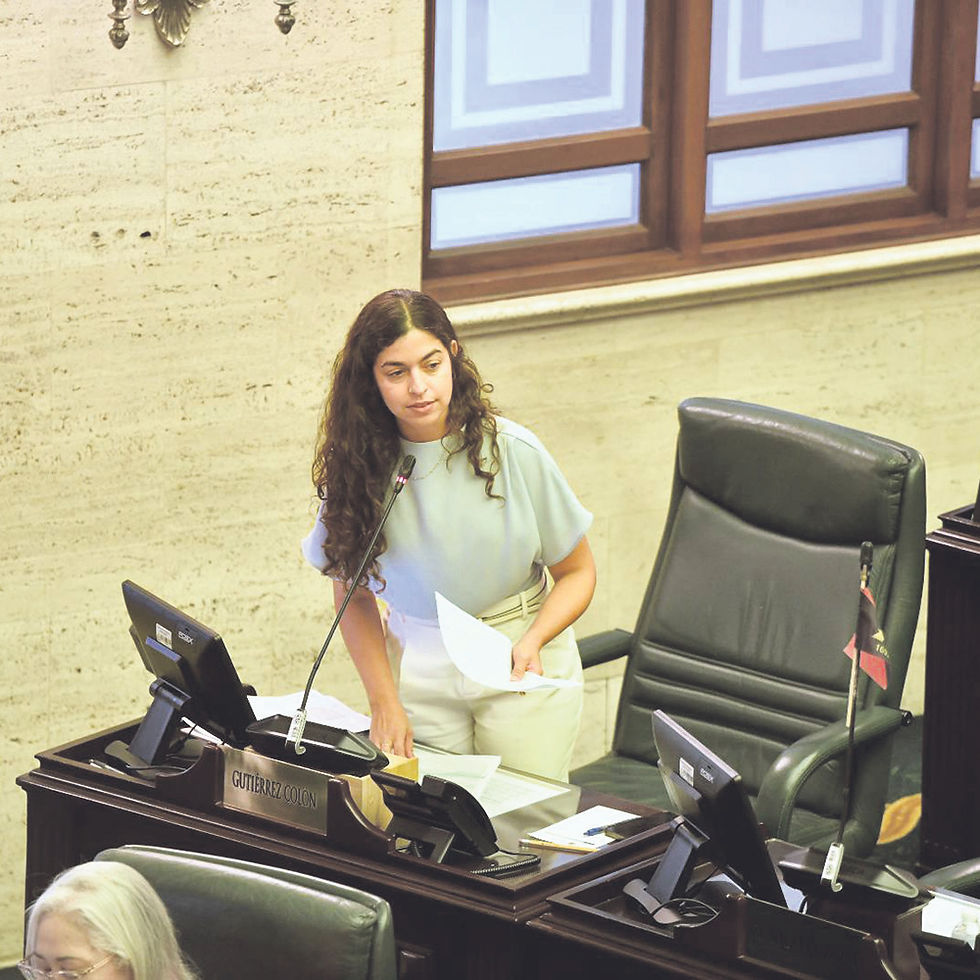
Puerto Rican Independence Party (PIP) Rep. Adriana Gutiérrez Colón also said that after the repeal of the earlier Minimum Wage Commission, the Legislature did not discuss raising the minimum wage in 25 years, underscoring that the topic will be stalled at the Legislative Assembly.
“That is the data you can’t ignore,” she said. “That fact was the reason for the creation of the Minimum Wage Evaluation Commission.”
Under the bill, the Legislature must conduct a quadrennial review of the minimum wage beginning immediately after enactment. That review must consider the prevailing federal minimum wage, any future federal increases already legislated, the island’s cost of living, workers’ needs, and the economic and competitive conditions facing Puerto Rico’s businesses. The bill emphasizes that any adjustment must avoid “reducing employment substantially,” establishing a statutory balance between worker income and economic impact. The text states plainly that “every four years, the Puerto Rico Legislature will examine the minimum wage hike if it is justified.”
The move represents a deliberate retreat from the model adopted in 2021, when Puerto Rico created an independent seven‑member commission empowered to review and adjust the minimum wage. According to the bill’s exposition of motives, that structure “stripped elected representatives of their power to intervene in the process of setting the minimum wage,” and placed sweeping economic authority in the hands of unelected officials. Lawmakers point to the commission’s first and only decision -- a 2024 increase approved by just three of its five appointed members at the time -- as evidence of structural flaws. The document underscores that the commission never operated with its full seven‑member composition and that “three unelected individuals … made a decision that affected the entire economy.”
The measure also leans heavily on recent judicial developments that have reshaped the limits of administrative power. It cites the U.S. Supreme Court’s 2024 decision in Loper Bright v. Raimondo, which overturned the Chevron doctrine and curtailed deference to federal agencies. Puerto Rico’s Supreme Court adopted the same reasoning in Vázquez y Torres v. Consejo de Titulares, prompting lawmakers to argue that broad delegations of policymaking authority -- such as those granted to the 2021 commission -- are now legally vulnerable. The bill notes that the commission “lacks such basic principles as an adequate representative balance” and is not directly accountable to the executive branch, unlike federal agencies whose regulations have recently been struck down under the new legal standard. The PIP lawmaker noted the commission was paralyzed because the government did not appoint members to the panel.
The bill further argues that the commission is ill‑suited to navigate the fiscal oversight structure imposed by Puerto Rico Oversight, Management and Economic Stability Act, commonly known as PROMESA, noting that any wage decrees must ultimately be reviewed by the Financial Oversight and Management Board. Lawmakers contend that an unelected commission is not the adequate body to present economic policy changes before that federally mandated body.
The bill also situates the wage debate within the administration’s broader economic agenda, pointing to an ongoing tax reform effort to increase workers’ disposable income by reducing their tax burden. Beyond restructuring the policymaking process, the bill preserves all mandatory decrees previously issued by the commission, provided they do not set wages below the prevailing minimum. It also establishes penalties for employers who violate wage requirements, including fines ranging from $500 to $10,000 and civil liability equal to double the damages caused. Employees would retain the right to pursue wage claims individually or collectively, with a five‑year statute of limitations.
With House approval, the measure now becomes a central economic policy debate for the remainder of the session. If enacted, the law would take effect immediately, formally repealing Law 47‑2021 and reinstating the Legislature as the sole authority responsible for setting and revising Puerto Rico’s minimum wage.