


Rescuers search for survivors after Venezuela’s worst quakes in decades


By MARIA VICTORIA FERMIN, ANATOLY KURMANAEV, JULIE TURKEWITZ and ISAYEN HERRERA
Rescue crews and residents dug through the rubble of buildings on Thursday searching for survivors after the worst earthquakes to hit Venezuela in nearly six decades.
At least 188 people were killed and more than 1,500 injured in back-to-back quakes on Wednesday, the president of Venezuela’s national assembly said. The toll from the quakes, which struck the country’s populous northern states, was virtually certain to rise as rescuers began to reach the hardest-hit areas.
Videos posted on social media show collapsed residential towers in the capital, Caracas, and in the nearby port city of La Guaira, where more than 100 buildings were destroyed, according to the United Nations’ main humanitarian agency. There were growing fears about the toll in nearby shantytowns, where many people live in precarious homes built on hillsides.
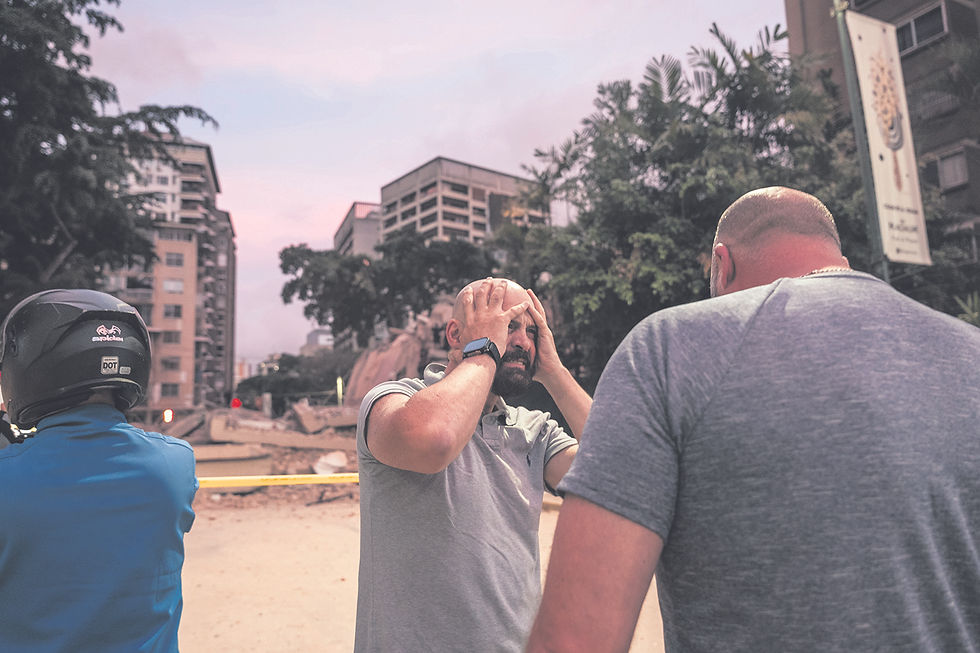


esidents in La Guaira said they had seen few rescue workers and minimal government presence. Many began digging through the rubble themselves. People outside one collapsed building estimated that hundreds were trapped beneath the ruins. One woman, Yorliana Colmenares, listened to taps coming from people trapped underneath.
“They’ve pulled out a lot of dead people,” she said, adding that she believed her boyfriend was inside the building. “Injured people, children, animals.”
Outside another collapsed structure, a couple searched for their eight-year-old boy, who had been playing basketball nearby when the quakes hit.
Venezuela is rich in oil, but is still trying to emerge from a decadelong depression that wiped out most of its economic production and prompted millions to leave the country. Its rescue services have been hollowed out, infrastructure has deteriorated and inflation has reached record highs, which is likely to compound the challenges of recovery.

The disaster comes at a pivotal moment in Venezuela’s modern history. A U.S. military raid removed the long-ruling autocrat, Nicolás Maduro, in January, transforming the country from a U.S. adversary into effectively a satellite state.
The earthquakes are likely to complicate the tussle for power that has followed Maduro’s arrest. His former vice president, Delcy Rodríguez, took over as president with Washington’s blessing but has faced growing popular discontent.
Shortly after the quakes, Rodríguez called for national unity and pointed to the promises of international aid to her government, including from President Donald Trump.
“We will be there for our new and great friends,” Trump wrote in a social media post Wednesday night, adding he has told governmental agencies to “get ready to move quickly.”
Here’s what else to know:
Witnesses: Residents of Caracas and nearby cities described scenes of terror and confusion as buildings collapsed, windows rattled, and homes lost power when two major earthquakes struck the country on Wednesday evening.
Structural risks: The U.S. Geological Survey said that many people in affected areas live in structures made of brick masonry and adobe block construction that are not reinforced and therefore more vulnerable to earthquakes.
Destructive factors: Scientists said several factors amplified the quakes’ power. The two temblors came in quick succession, a rare “doublet.” The quakes also struck in a valley full of loose sediments, which causes more destructive shaking.
International aid: Rodríguez said that rescuers from other countries would start arriving in Venezuela early Thursday, including teams from the United States, the Dominican Republic, El Salvador, Mexico and Qatar. China, Brazil and several Caribbean nations have also offered support, she added.


