


Temporary emergency generation contract process was a study in cross-conflicts

By THE STAR STAFF
Puerto Rico’s attempt to secure 800 megawatts (MW) of temporary generation, an emergency measure meant to keep the lights on during the island’s most vulnerable months, unfolded over 2025 as a prolonged struggle marked by bureaucratic delays, political intervention, supplier disputes and open conflict with federal overseers.
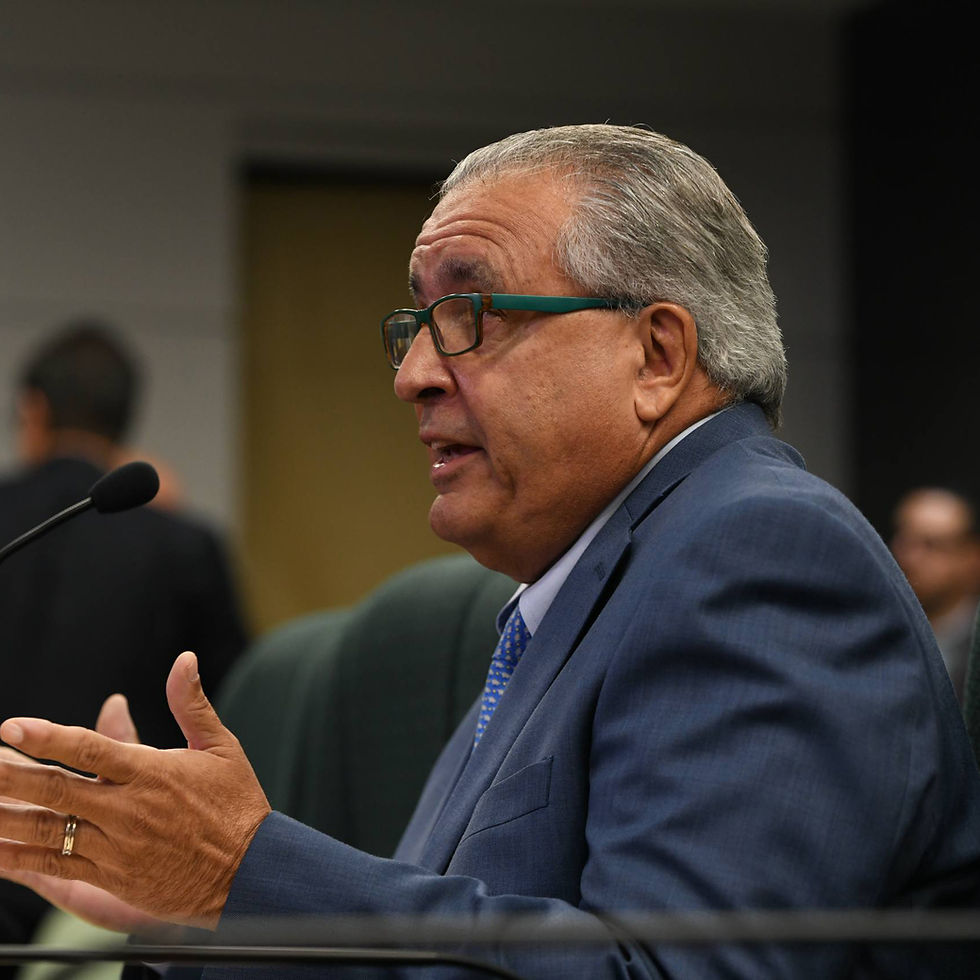
Internal chats, revealed by Jay Fonseca, between Energy Czar Josué Colón Ortiz and Third-Party Procurement Office (3PPO) counsel Osvaldo Carlo Linares reveal a procurement process that began amid crisis and never escaped it.
By early that year, Colón was warning that Puerto Rico’s grid was running on borrowed time. Six major units were offline simultaneously, including Aguirre 1, which had suffered a generator failure so severe that 260,000 customers lost power in a single event. Aguirre 2’s return depended on an inspection at an off‑island manufacturer. San Juan 6 and 7, Palo Seco 4, and Costa Sur 5 were also out of service. The island’s available generation hovered around 2,800 megawatts, while summer demand was expected to exceed 3,200. In one message, Colón wrote plainly that Puerto Rico faced a deficit of 1,846 megawatts and that the only way to avoid blackouts was to urgently procure 800 megawatts of temporary generation.
That job was delegated to the 3PPO. The first attempt to do so collapsed almost immediately. The 3PPO issued a request for proposals (RFP) in March 2025 and selected Power Expectations as the winning proponent. But the Puerto Rico Energy Bureau (PREB) later issued an order modifying the conditions of the procurement, forcing the cancellation of the entire process. A second RFP followed, this time selecting three companies -- Power Expectations, Gothams Energy and Javelin Global Commodities. The Puerto Rico Electric Power Authority (PREPA) governing board authorized contract negotiations with all three, but only within the terms of the RFP and subject to approval by both the PREB and the Financial Oversight and Management Board (FOMB).
From that point forward, the chats show a procurement office struggling to function. Carlo repeatedly warned Colón that the 3PPO was operating without a contract, that Genera PR, the private operator of the island’s legacy power plants, had not signed required documents, and that his own firm had accumulated $800,000 in unpaid work tied to the emergency generation procurement.
He described the process as stalled on the desk of PREPA official Lionel Zapata, who appears throughout the messages as a persistent bottleneck. The delays were so severe that Carlo told Colón he had entered a “veda total” or total blackout with the press, referring all inquiries to Colón and La Fortaleza.
By late summer, the governor herself intervened. Carlo told Colón that Gov. Jenniffer González Colón had instructed the 3PPO not to notify selected bidders until she received a full briefing. Later, ahead of a meeting with the oversight board, Colón asked Carlo and PREPA counsel Juan González to prepare a one‑page briefing explaining how long the board had held the Power Expectations and Gotham contracts, how the 3PPO had answered every request for information, and how Puerto Rico remained at risk of blackouts if the contracts were not approved.
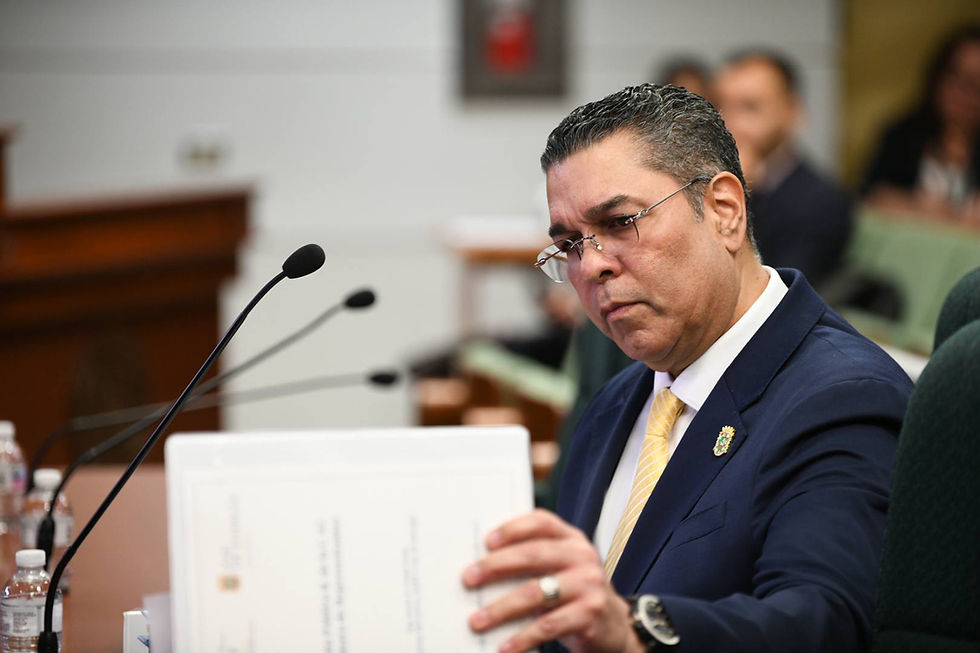
“We have to put the governor in a position to be able to refute the arguments,” Colón wrote.
The chats show a governor directly intervening in a procurement that, by law, is supposed to operate independently.
The process soon attracted attention from outside Puerto Rico. In November, a staffer for U.S. Sen. Marsha Blackburn (R-Tenn.) called Colón seeking information on why the Power Expectations contract had not been sent to PREPA’s board. The staffer said the inquiry was made on behalf of “one of our most valued voters” connected to the company. The involvement of a U.S. senator’s office in a Puerto Rico energy procurement is highly unusual, demonstrating how politically charged the contract had become.
Meanwhile, Javelin signaled it would take the matter to court, arguing that the RFP’s “zero‑guarantee” condition was unacceptable. The PREB issued an order stating that the oversight board had no jurisdiction over the emergency generation procurement. Carlo told Colón the same, noting that although the board continued issuing requests for information, it was not the proper forum to determine whether the RFP had been conducted correctly.
“If there is any bidder who believes that he has a claim,” he wrote, “let him follow the process dictated by the laws.” The board’s continued involvement only deepened the delays.
Complicating matters further, the government’s initial belief that floating power barges could quickly deliver the needed generation evaporated after meetings with the U.S. Coast Guard and federal environmental agencies. Carlo reported that the proponent did business with sanctioned countries, raising security concerns. Barges would require seabed mapping, dredging, and the installation of underwater posts, all of which required permits. During hurricanes, barges would have to be removed from port and might not return for weeks or months. Their cooling systems would raise water temperatures, threatening manatees and sea grass. Federal agencies estimated at least a year for permitting. “Presenting an alternative that has the potential to confront substantial delays ... was not viable,” Carlo wrote. The barge solution, once seen as the fastest option, was effectively dead.
The chats also reveal deep frustration with the oversight board’s role in the gas supply negotiations tied to the temporary generation contracts. In July, Colón wrote a blistering message accusing the board of hypocrisy for criticizing exclusivity in gas supply arrangements. He argued that the board itself had approved contracts in 2018, 2019 and 2023 granting New Fortress Energy exclusive access to the only northern liquefied natural gas (LNG) dock and exclusive rights to receive, store and deliver gas there. “They are political hypocrisies,” he wrote. “The current scenario is the DIRECT result of what FOMB approved.” The dispute over gas supply terms further delayed the emergency generation contracts.
What emerges from the messages is a portrait of a government racing against time but repeatedly tripping over its own processes. A procurement office without contracts or payment. A governing board slow to sign documents. A regulator and an oversight board fighting over jurisdiction. Suppliers threatening litigation. Federal agencies raising environmental alarms. A governor intervening directly. A U.S. senator’s office making inquiries. And a grid on the brink of failure.
Eventually, the oversight board earlier this year voted to revoke the approval of the power generation contract between PREPA and Power Expectations LLC, Enchanted Rock LLC and Reyes Contractor LLC, and direct PREPA to terminate the contract, and to refer the contract issues to the relevant law enforcement authorities.
The oversight board made its determination following a statement by ERock Inc., the holding company of Enchanted Rock, on Aug. 7 of this year, that said the company is not a party to the power generation project and its name and signature were used without authorization.
One of the most critical factors in the oversight board’s approval of the $5.9 billion, 10-year contract to deploy, install, operate and maintain temporary power generation units with an aggregate capacity of 400 MW was Enchanted Rock’s role as the equipment provider. According to the 3PPO, Power Expectations lacked the financial capacity and technical expertise to perform the contract without Enchanted Rock. Because Enchanted Rock stated it is not involved in the process, the procurement is irreparably impaired.


Comments