


This war has not gone Putin’s way.

By SERGE SCHMEMANN
The Iran war has been an economic windfall for Russia, pushing oil prices sky-high and loosening sanctions. But if the Russian economy is having a brief respite, the battering of Iran by the United States and Israel marks yet another in a series of recent blows to the great-power role President Vladimir Putin so cherishes.
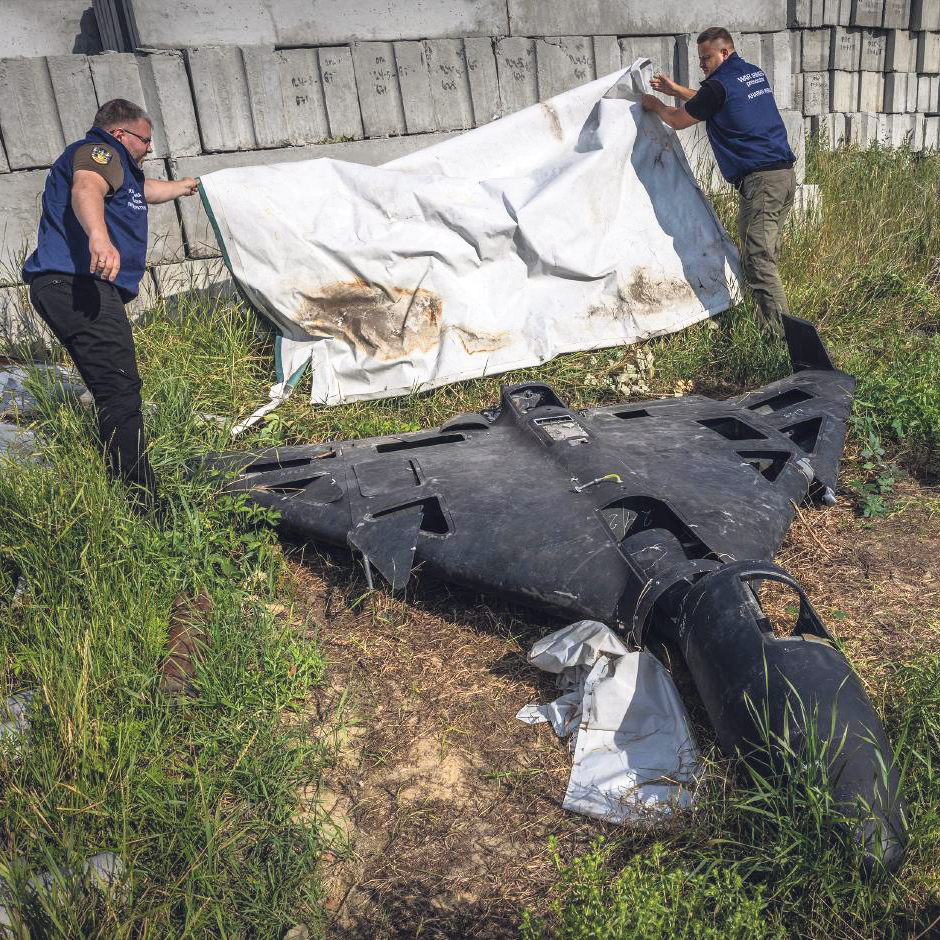
Iran has been Russia’s closest partner in the Middle East, supplying Moscow with drones for use in Ukraine and a critical route to evade sanctions over its war there. The large-scale damage to Iran’s economy and military comes on the heels of the capture of the Kremlin’s South American ally Nicolás Maduro in a U.S. raid on Venezuela in January. Before that, the Kremlin was unable to prevent the fall of another comrade-dictator when Bashar Assad was toppled in Syria (and subsequently fled to Moscow). That left the future of Russia’s military bases in Syria in question.
“And Cuba’s next, by the way, but pretend I didn’t say that,” President Donald Trump playfully said at a meeting of investors at the end of March, threatening another This War Has Not Gone Putin’s Way Russian ally. Cuba is already in dire economic straits with the cutoff of Venezuelan oil and intensified U.S. embargoes, and it was only with U.S. permission that Russia was able to send a tanker of oil to the island late last month. Russia is dispatching a second tanker, but the Trump administration has not said whether it will be allowed to reach Cuba.
Russia, moreover, has been excluded from any say in the future of Iran or its other allies. Instead, Russian oil companies are being squeezed out of post-Maduro Venezuela. In January, U.S. forces showed no compunction about seizing a Russian tanker that purportedly violated sanctions on dealing with Venezuela.
That cavalier treatment must be painful for Putin, who longs to restore his country’s global clout to Soviet levels. Trump’s mysterious affinity for the Russian strongman has been a major card in Putin’s hand, one he has hoped to parlay into Washington’s support for the victory he seeks in Ukraine: the capture of the whole of the Donbas region and the neutralization of Ukraine. Accordingly, Putin has avoided criticizing Trump personally for the fate of his friends.
Yet Putin’s quandary — one that many other global leaders share — is that he has no idea what Trump may take it into his head to do next. Trump’s admiration for Putin has been punctuated by eruptions of pique, such as this one after a Cabinet meeting last year: “I’m not happy with Putin, I can tell you that much right now, because he’s killing a lot of people,” Trump said, while praising Ukrainians as “very brave.”
Putin’s dilemma was on full display at a recent meeting of the Russian Union of Industrialists and Entrepreneurs. “It seems to me that those who are involved in the conflict cannot predict anything themselves, but for us it is even more difficult,” Putin said.
Further underscoring the notion that Russia’s gains during the Iran war would not make up for the enormous costs of the invasion of Ukraine, an independent Russian news outlet reported that Putin has asked oligarchs to make voluntary contributions to the budget. It would be the first time Putin has personally asked Russia’s billionaires to prop up government finances drained by the war. The Kremlin denied Putin had made such a request, but acknowledged that one tycoon had pledged a “very large sum of money” to the state.
While Putin has avoided directly criticizing Trump, he has not been entirely silent about his war in Iran. He condemned the killing of Iran’s supreme leader, Ayatollah Ali Khamenei, as a “cynical” murder and violation of international law. Intelligence reports suggest that Russia had been assisting Iran with targeting intelligence about U.S. bases, as well as supplying it with upgraded versions of Iran’s own Shahed-136 drone that Moscow now manufactures under license for its war in Ukraine.
Russia has denied those reports, but Wednesday, Russia further challenged the administration more openly when Foreign Minister Sergey Lavrov, on a visit to China, declared that Iran had an “inalienable” right to enrich uranium, while the United States has demanded in recent negotiations that Iran surrender all of its enriched uranium.
Trump, for his part, largely shrugged off reports of the Russian help with targeting, saying, “If they are, they’re not doing a very good job.” He later acknowledged that Putin “may be helping them a bit, yeah,” but he dismissively added: “He probably thinks we’re helping Ukraine. They do it, and we do it.” That approach stands in stark contrast with Trump’s growing irritation at NATO allies that have declined his invitation to help clear the blockaded Strait of Hormuz. “So this was a great test, because we don’t need them, but they should have been there,” he said at a meeting with the Irish prime minister March 17. He has since threatened to leave the alliance altogether.
Even with the possible injection of oligarch money into the Ukrainian war effort, and the possibility of fewer U.S. armaments going to Kyiv, the conflict will continue taking a huge toll on Russia. Ukraine has been flying drones deep into Russia to strike oil terminals and has been making new friends around the Gulf by sending military specialists to help defend them against Iranian drone strikes. And after four years, fatigue with the war is deepening in Russia. A recent survey cited by Bloomberg showed that 67% of those polled said Russia should move toward peace talks.
The war, moreover, is draining resources that Russia should be using to keep its technological and industrial development in line with the industrialized world. “Each day the war continues, Russia falls farther behind in the great-power competition that will dominate global geopolitics in the years ahead,” said Thomas Graham, a fellow at the Council on Foreign Relations and the author of “Getting Russia Right,” on the council’s website. “Russia does not need resources to continue the war against Ukraine; it needs incentives to end it.”
The Iran war has weakened those incentives in the short term. But they must remain the same: Give Ukraine what it needs to hold its own until Putin realizes the violence is getting him nowhere.


Excellent reporting! 소액결제현금화 This is exactly the kind of in-depth, well-researched journalism we need more of. Thanks for keeping us informed and presenting the facts so clearly!
Beim Testen verschiedener interaktiver Spielumgebungen ist mir aufgefallen, dass die technische Verlässlichkeit oft unterschätzt wird. Bereits in der frühen Nutzungsphase habe ich zusätzlich Informationen zu Vulkan Casino einbezogen, um unterschiedliche Erfahrungsansätze zu vergleichen. Interessant ist dabei, wie stark kleine Verzögerungen oder inkonsistente Übergänge die Gesamtwahrnehmung beeinflussen können. Selbst optisch gut gestaltete Plattformen verlieren an Qualität, wenn Abläufe nicht gleichmäßig funktionieren. Entscheidend ist für mich eine klare Struktur, bei der Navigation und Inhalte logisch aufeinander aufbauen, sodass keine unnötigen Brüche entstehen und die Nutzung dauerhaft angenehm bleibt.