Trump quietly asserts control over Postal Service amid plans to overhaul voting


By ZOLAN KANNO-YOUNGS, ADAM SELLA and NICK CORASANITI
Four weeks before President Donald Trump signed an executive order seeking to restrict mail voting, he filed four nominations for vacancies on the Board of Governors of the U.S. Postal Service.
All four were Republicans. Three have expressed doubts about who won the 2020 presidential election and the security of voting.
The selections broke with a long-standing practice of nominating board members in bipartisan pairs. Two of those nominees are on a fast track for approval, and could reach a full Senate vote when the chamber returns from recess in September. If confirmed, their appointments would effectively tip the board to a majority that is loyal to Trump.
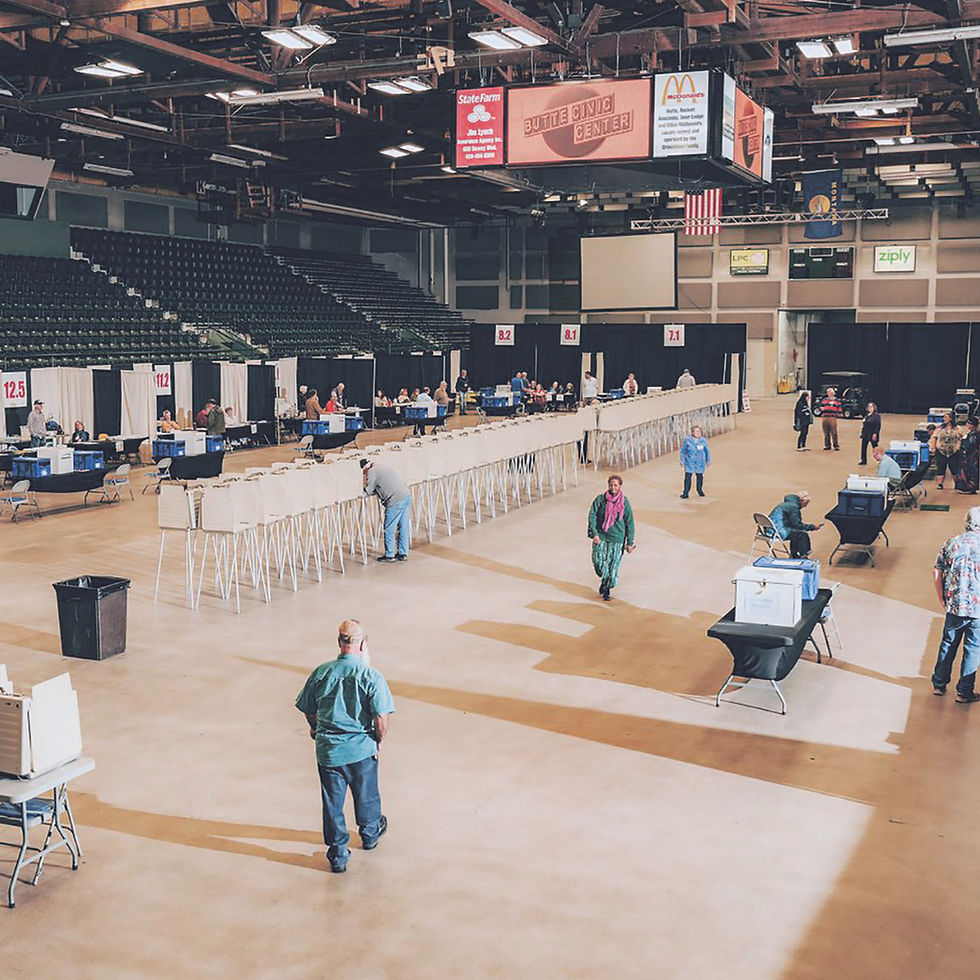
The quiet attempt to restructure the leadership of the Postal Service comes as the president and his allies are trying to transform the 251-year-old agency into a central player in their quest to overhaul the nation’s elections. Last year, Trump took an unusually active role directing the board of governors to select the current postmaster general, David Steiner. And the president has imposed a highly partisan agenda on a historically apolitical institution: restricting mail voting, a practice more heavily used by Democrats than Republicans, which Trump has publicly acknowledged would benefit his party.
Control of the Postal Service grew even more critical Monday, after the Supreme Court ruled to allow the administration to move forward with plans to restrict mail-in voting before the midterm elections.
The justices cautioned that the decision was preliminary and should not be construed as a final determination on the legality of the order. It also remains unclear whether the administration can implement the restrictions in time for mail voting this year.
“It is clear to me that the president is looking for people who will do exactly what he says and will carry out his order without respect for the U.S. Postal Service,” said Sen. Elissa Slotkin, D-Mich., who serves on the Senate Homeland Committee with oversight of the agency.
Jonathan Smith, the head of the American Workers Postal Union, said postal workers are worried about being ordered to implement policies that are legally questionable.
“They can direct the people I represent to follow procedures we perceive as possibly not constitutionally sound or legal or even ethical,” Smith said in an interview. “Because the board of governors were put there for that purpose.”
Since he returned to power last year, Trump has recruited allies for key roles across his administration who are willing to act on his false claims that his defeat in 2020 was rigged and the country’s election systems are not secure. He has pressed for criminal investigations of election officials in states he lost in 2020. His top legislative priority is enacting a law that would require proof of citizenship to register to vote. He has deployed the Department of Homeland Security to scour state voter rolls for noncitizens.
Few agencies are as central to this mission as the Postal Service. And few are as blatantly straining the boundaries of executive power. The Constitution grants the president no authority over elections, an area of governance that only Congress and the states may regulate. Yet Trump has instructed the Postal Service to effectively police mail voting and decide which ballots can be delivered.
The president turned to the Postal Service to pursue his agenda of curtailing mail voting as other efforts to do so faced defeat in the courts and in Congress. He has urgently stayed on the issue in the midst of a daunting midterm cycle for Republicans, stating publicly that his party could keep control of Congress if mail voting could be blocked.
In March, he signed an executive order that would grant the Postal Service the power to block mail ballots from being sent in states that do not comply. It called on the Department of Homeland Security to compile state-by-state citizen lists to help determine eligibility, and instructed the Postal Service to verify voters based on rolls provided by states.
Roughly two months later, the Postal Service proposed a rule intended to implement a key piece of the executive order, authorizing the agency to refuse to deliver mail ballots in states that failed to turn over those voter rolls.
The potential electoral consequences of such a policy could be enormous. A coalition of nearly two dozen states, almost all Democratic-controlled and representing more than half of the country’s population, sued to block the executive order and have not complied with any aspect of it.
When the proposed rule came out, Steiner also declared that the agency would follow any court orders governing voting by mail. But weeks later, after a federal judge struck down key provisions of the president’s executive order, not all the implementation stopped. Although the Postal Service circulated an email to all employees in early July declaring that Trump’s demands on the agency were “legally void,” a Postal Service executive said in a court filing that same week that work was proceeding to create the infrastructure to evaluate eligibility to vote by mail.
Regardless of the ultimate impact of the Supreme Court’s ruling, Trump has hinted that he is unlikely to drop the issue. In an interview with Wayne Allyn Root, a conservative TV and radio host, the president suggested that he might try to test unproven claims of executive authority.
“You have the right to declare a national security emergency for elections,” Root said, referring to a legally dubious theory popular among right-wing election activists that the president can use such a justification for extraordinary measures, despite no constitutional support for the theory. Root added: “If you do this in the next month, we will get photo ID, proof of citizenship, and a limit to mail ballots.
“Let me just say stranger things have happened, OK?” Trump responded. “I’ll leave it at that.”
A spokesperson for the Postal Service declined to answer questions about the nominees or pending litigation. The White House declined to comment.