


Venezuelan navy escorts vessels after Trump’s blockade threat

By EDWARD WONG, ANATOLY KURMANAEV and ERIC SCHMITT
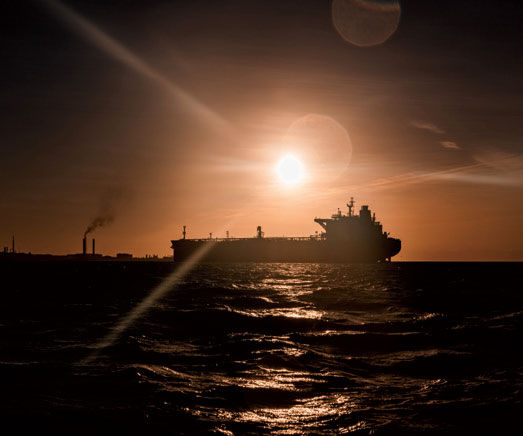
Nicolás Maduro, the leader of Venezuela, ordered his navy to escort ships carrying petroleum products from port, risking a confrontation with the United States on the high seas as he defied President Donald Trump’s declaration of a “blockade” aimed at the country’s oil industry.
Several ships sailed from Venezuela toward Asia with a Venezuelan naval escort between Tuesday evening and Wednesday morning, said three people familiar with the transits. None of the commercial vessels are on the list of sanctioned tankers the United States is threatening to target.
But the recent cascade of events, set off by the Trump administration’s seizure of a tanker last week and then by the president’s order of a partial “blockade” Tuesday, increased the likelihood of a violent conflict.
In the months since Trump began carrying out a pressure campaign against Venezuela, which includes lethal boat strikes that are widely deemed illegal by law experts, Maduro has refrained from answering with force. But that is being tested as Trump aims to drain the country’s oil revenues, the lifeblood of Venezuela’s economy, by cutting off some tanker traffic and seizing the oil.
Trump has talked repeatedly over the years about taking oil from Venezuela and the Middle East, and one of his envoys pushed Maduro to give greater access to American oil companies in secret negotiations this year. Venezuelan oil has become a focus of Trump’s pressure campaign aimed at ousting Maduro, though publicly the administration frames it as a counternarcotics effort.
The three ships that left the Port of José on the Caribbean coast of Venezuela carried urea, petroleum coke and other oil-based products, said two of the people familiar with the transits, who spoke on the condition of anonymity because of the sensitivities. The third person familiar with the matter, a U.S. official, said Washington was aware of the escorts and was considering various courses of action.
The vessels leaving the port were not on a list of sanctioned vessels maintained by the Treasury Department, according to a review by The New York Times.
Venezuela’s state oil company, known as PDVSA, said in a statement Wednesday that ships connected to its operations were continuing to sail “with full security, technical support and operational guarantees in legitimate exercise of their right to free navigation.”
About 40%, or nearly 180, of the tankers that have transported Venezuelan crude in recent years have been placed under U.S. sanctions, according to Samir Madani, cofounder of TankerTrackers.com. There were more than 30 such vessels operating in Venezuela earlier this month, the group said. The vessels have a history of transporting oil from countries under U.S. sanctions.
Chinese private buyers account for 80% of Venezuela’s oil sales, but Trump has not pressured China to curb those purchases. He has been focused on a planned summit with China’s leader in Beijing in April.
What Trump is doing now is outside the realm of nonviolent sanctions and economic coercion on Venezuela and possibly moving up the “escalatory ladder” of military force, said Edward Fishman, a former State Department sanctions specialist.
“It’s fundamentally much more aggressive, much more confrontational and much riskier,” he said. “Once you impose a naval blockade, you’re only a stone’s throw away from using kinetic force.”
The U.S. Coast Guard and law enforcement officers last week seized an Asia-bound sanctioned tanker, the Skipper, carrying nearly 2 million barrels of Venezuelan crude. At the time, the Trump administration had already made plans to seize more tankers carrying Venezuelan oil, a U.S. official said.
Trump has said he will keep seized Venezuelan oil, but it is unclear how that would be legal. The U.S. government did not obtain specific permission from a court to seize the oil last week.
The administration did get a federal warrant to seize the Skipper based on the vessel’s history of carrying oil from Iran, an arm of whose military has been designated a foreign terrorist organization by the United States. And separately, U.S. agencies had a right to board the vessel under international law because it had been flying the flag of Guyana when it was not registered there, said William D. Baumgartner, a retired Coast Guard rear admiral who oversaw operations in the Caribbean.
“You determine the vessel is stateless and not flying a valid flag,” he said.
Trump’s announcement of a “blockade” caught senior officials at the Pentagon and at Southern Command in Florida by surprise. On Wednesday, they scrambled to figure out the U.S. military’s role in the action, U.S. officials said.
Typically, a country’s naval forces take part in a blockade, which is considered an act of war. But Trump qualified his goal by saying he wanted only to halt U.S.-sanctioned tankers.
Within the administration Wednesday, there was little clarity on whether the U.S. military would lead the effort, or whether law enforcement agencies and the Coast Guard, which is under the Department of Homeland Security, would take the lead, with the Defense Department playing supporting role.
If Maduro continues to order the Venezuelan navy to escort vessels, that raises the likelihood that the U.S. military will get involved in halting any sanctioned ships — and increases the chances of a military confrontation.
In Venezuela, ordinary citizens have been shocked by Trump’s remarks about seizing the country’s oil, which suggests Maduro could have public support for using the military to stand firm against the United States.
Likewise, in some Latin American nations, there is growing suspicion that Trump is trying to provoke Maduro to take action and create a violent episode that would be a casus belli for expanded U.S. military operations — perhaps even war — against Venezuela. Citizens across the region often cite the history of U.S. imperialism in the Western Hemisphere.
Their suspicions are underscored by the bellicose language of Trump in his announcement, which was as vehement an expression of gunboat diplomacy as anything an American president has said in recent decades.
“Venezuela is completely surrounded by the largest Armada ever assembled in the History of South America,” he wrote on social media. “It will only get bigger, and the shock to them will be like nothing they have ever seen before.”
He added that the coercive military operations would continue until Venezuela returns “all of the Oil, Land, and other Assets that they previously stole from us” — an undertaking that the country would have to do “IMMEDIATELY.”
Trump appeared to be referring to the Venezuelan government’s placing the oil industry under state control in 1976, which led to almost all U.S. oil companies leaving the country. Chevron stayed put throughout and operates there despite sanctions imposed by the first Trump administration because it has a newly extended confidential license from the U.S. government.
Since early September, the U.S. military has been carrying out airstrikes on boats in the Caribbean and eastern Pacific, many of them near Venezuela, in a campaign that has killed at least 99 people in 26 attacks. Many legal experts say that the strikes are illegal and that the military is killing civilians. Trump has also threatened to do land strikes in Venezuela.
The Pentagon has amassed an armada of more than a dozen ships in the Caribbean Sea. The arrival of the aircraft carrier Gerald R. Ford and three missile-firing Navy destroyers in November added about 5,500 military personnel to a force of 10,000 troops already in the region, roughly half ashore in Puerto Rico and half aboard a dozen warships. With more than 15,000 military personnel, the U.S. buildup is the largest in the region in decades.
What happens next in response to Trump’s latest directive is not clear. U.S. Navy vessels in the Caribbean had already been shadowing tankers that are under sanctions in international waters as they approached Venezuela, aiming to deter them and prompt their captains to turn around, current and former Navy officials said Wednesday.
Barring that deterrence, U.S. commanders and law enforcement officials said they were preparing at least two possible courses of action.
One is to identify and seize ships under sanction with other agencies as a law-enforcement operation, once legal warrants are approved. That would follow the example of the Skipper’s seizure.
The other route would involve the use of armed, helicopter-bound U.S. Navy boarding teams from warships in the region, current and former Navy commanders said. That becomes likelier if oil tankers have Venezuelan naval escorts.


