DDEC urges approval of permit reform.

By THE STAR STAFF
In a pivotal move that could reshape Puerto Rico’s economic landscape, the Department of Economic Development and Commerce (DDEC by its acronym in Spanish) has thrown its full support behind House Bill 1213, the measure that would overhaul the island’s notoriously cumbersome permitting and planning system.
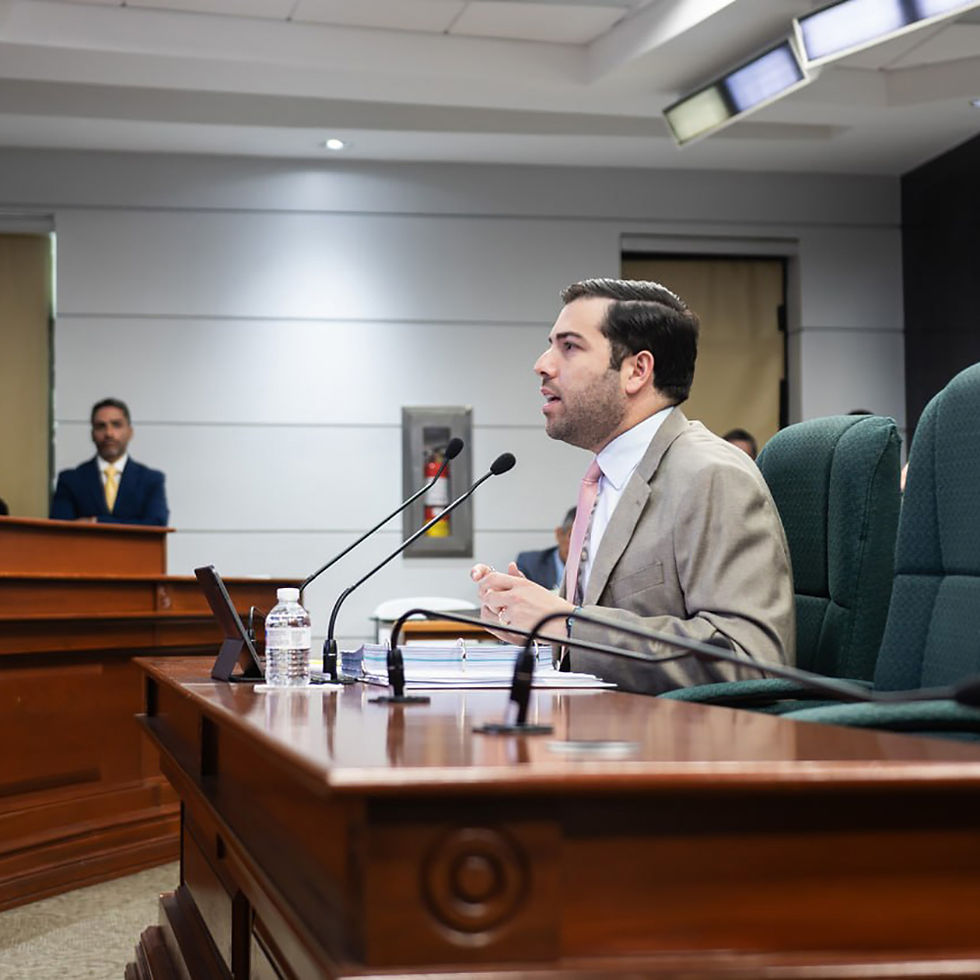
The DDEC, along with its Office of Permit Management (OGPe), presented a comprehensive explanatory memorandum to the Special Committee of the island House of Representatives this week, urging lawmakers to seize what it describes as a “unique and historic opportunity” to address one of Puerto Rico’s most persistent obstacles to growth.
The written memo, authored by DDEC Secretary Sebastián Negrón Reichard, paints a vivid picture of a society stifled by bureaucratic inertia. For decades, Puerto Rico residents -- whether homeowners, small business owners, entrepreneurs or investors -- have faced a labyrinthine process to obtain the necessary permits for construction, business operations, or land use. The consequences, the DDEC argues, have been dire: Puerto Rico ranks last in the United States in economic freedom indices, and the resulting lack of competitiveness has contributed to a dramatic population decline. Between 2008 and 2022, nearly 700,000 people left the island, with over 40% of them young adults in their prime productive years.
The document recounts harrowing stories: a family waiting 577 days to rebuild a hurricane-destroyed home, an entrepreneur enduring 440 days and 14 separate procedures across five agencies just to open an ice cream shop, and a coffee shop owner navigating 372 days and eight rounds of corrections. Those are not isolated incidents, Negrón Reichard notes, but rather symptoms of a system described as “fragmented, incoherent, and structurally deficient.”
The roots of the problem, according to the DDEC, lie in a tangled web of more than 45 laws and dozens of regulations, each delegating overlapping responsibilities to multiple agencies. The result is a process that is not only slow -- construction permits can take anywhere from 263 to 540 days -- but also unpredictable and costly. The lack of a unified digital platform means applicants often must submit paperwork in person, with more than 100 procedures still handled outside the intended Single Business Portal.
One of the most significant innovations of the bill is the creation of a Central Permits Office within the DDEC, which would serve as the single point of contact for all permit applications. The proposed code also empowers accredited professionals to handle routine permit requests, freeing up government resources for oversight and enforcement rather than endless pre-approval checks. The DDEC would become the custodian of a new Unified Regulation, ensuring that all rules are clear, stable, and take precedence over conflicting provisions.
Negrón Reichard addresses concerns that the new code would centralize too much power in the DDEC, clarifying that the intent is not to create a bureaucratic hierarchy but to ensure consistency and legal certainty. The code preserves the technical independence of the island Planning Board and the operational autonomy of municipalities, while also strengthening their role in the planning process. Municipalities would have active participation in the preparation of the island’s new Economic Development Plan and in all zoning map amendments.
Environmental protection is another cornerstone of the proposal. The new code separates the functions of permit adjudication and environmental enforcement, assigning the latter to the Department of Natural and Environmental Resources. It introduces a tiered system for environmental review, ensuring that only projects with significant impacts undergo the most rigorous scrutiny, while routine actions can be fast-tracked. The code also integrates public access to beaches and the protection of critical habitats into the fabric of the permitting process.
High stakes
The DDEC estimates that permitting costs currently account for up to 30% of the total cost of housing projects, a burden that is ultimately borne by families. In 2024, only 744 new homes were financed on the island, with average prices soaring by 25% in a single year. Nearly a thousand residential construction projects are stalled, representing $185 million in frozen investment and thousands of lost jobs. By streamlining the permitting process, the code could reduce those costs by as much as $48,000 per home, making housing more affordable and stimulating economic activity.
For investors, the promise of regulatory certainty is equally compelling. The DDEC document cites Florida as a model, where similar reforms have made the state a magnet for investment and job creation. In Puerto Rico, the DDEC believes that a predictable, transparent permitting system could unlock billions in new investment and create thousands of jobs, particularly in small and midsize enterprises that form the backbone of the local economy.
Implementing the new code would require an initial investment of $6.9 million, primarily for institutional transformation, technological upgrades and project management. The DDEC argues that those costs will be offset by savings from reduced duplication, increased tax revenues from new business activity, and lower litigation expenses thanks to clearer rules and fewer disputes.