Drought Committee anticipates expansion of extreme drought to eastern towns, metro area

By THE STAR STAFF
Meteorologist Ernesto Rodríguez announced on Monday that he will recommend expanding the extreme drought classification this week to include sectors of Gurabo, San Lorenzo, Las Piedras, San Juan, Carolina and Trujillo Alto, while the government acknowledged that some customers subject to the scheduled service interruption plan have not had their water service restored within the announced timeframes.
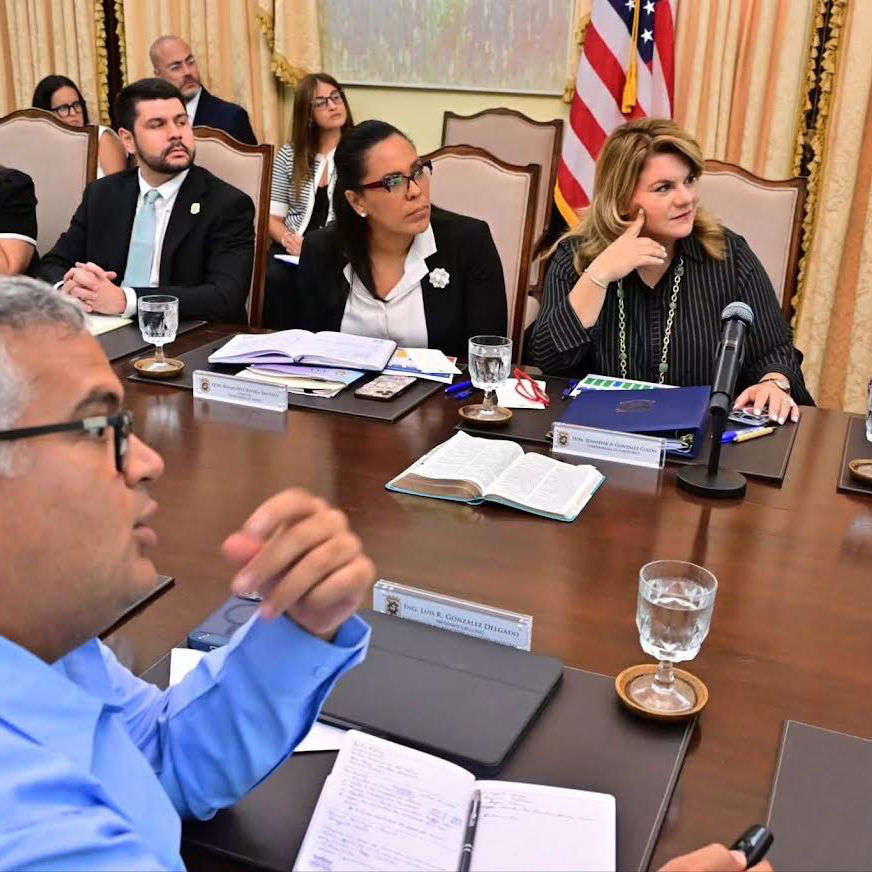
Rodríguez presented the outlook during the weekly meeting of the Drought Committee, led by Gov. Jenniffer González Colón at La Fortaleza.
“What we are seeing is that the Gurabo area, the northern part of San Lorenzo, Las Piedras, southern San Juan, Carolina and Trujillo Alto are set to enter the D3 category -- which is extreme drought -- joining some southern municipalities as the condition extends slightly further north,” Rodríguez said regarding the recommendation to be submitted on Thursday.
The meteorologist noted that the rainfall deficit continues to grow, particularly in the eastern third of Puerto Rico, with some areas recording 12 to 16 inches less precipitation than normal. The tributary rivers feeding the Carraízo reservoir also remain well below normal levels.
Although some 2.5 inches of rain fell last Tuesday over part of the Carraízo watershed, generating runoff into the reservoir, Rodríguez warned that the next two weeks will remain mostly dry. He noted that tropical waves currently being monitored are not expected to bring significant rainfall to Puerto Rico for the time being.
The pattern could begin to shift toward the end of August and into September, Rodríguez added; however, in the interim, conditions associated with the El Niño phenomenon will prolong the dry spell.
Meanwhile, Puerto Rico Aqueduct and Sewer Authority (PRASA) Executive President Luis R. González Delgado reported that the Carraízo reservoir stood at 37.48 meters in the morning and that its rate of decline had been cut roughly in half -- dropping from about nine centimeters per day to close to four or five centimeters.
La Plata was at 46.29 meters (observation level), while Cidra stood at 400.12 meters (adjusted level). Río Blanco also remained under observation, and Fajardo recorded a one-centimeter rise following recent rains.
On Monday, PRASA was working to restore service to Zone 2 of the interruption schedule -- particularly in higher-elevation sectors -- where restoration depends on rising levels in tanks, as well as the pressure and flow rates needed to activate pumping stations.
González Colón acknowledged that service has not returned within the timeframes originally communicated to some customers.
“People expect that if they are told 6 a.m., it happens at 6 a.m., and that hasn’t been the reality,” the governor said. “I think there is justified frustration.”
Energy Czar Josué Colón Ortiz said the reservoirs feeding the Superaqueduct are in better condition than others, although he recommended exercising caution with consumption to prevent those systems from also entering rationing phases.
The Department of Education reported 25 schools without water service on Monday; however, all were equipped with cisterns and continued holding classes as usual, the governor noted.
Separately, the Puerto Rico Tourism Company announced it has allocated $2 million to the “Mano Amiga” (Helping Hand) program. The initiative will offer up to $10,000 to tourism businesses affected by water shortages, including agritourism sites, lodging facilities, “paradores” (country inns), restaurants, and nautical tourism operators.