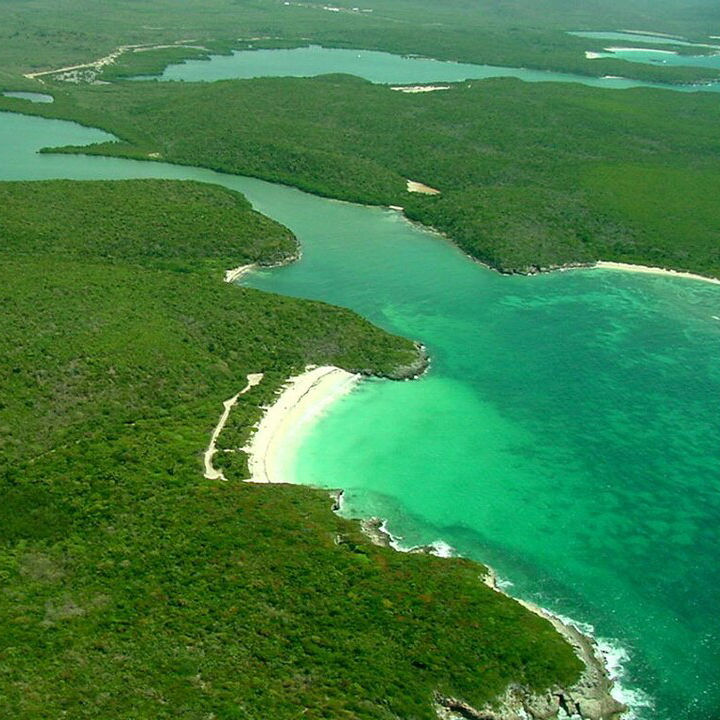
Environmental groups oppose changes to definition of maritime-terrestrial zone.


By THE STAR STAFF
Several environmental, scientific and community organizations expressed their opposition on Tuesday to House Bill 25, a measure seeking to update the definition of the Maritime-Terrestrial Zone (ZMT by its initials in Spanish) in Puerto Rico.
“The definition proposed in the bill does not adequately protect the coastlines, infrastructure, natural resources, or safety of coastal communities in the face of climate change and coastal erosion,” said Dr. Maritza Barreto Orta, director of the Puerto Rico Institute for Coastal Research and Planning.
Barreto argued that the measure employs limited and outdated criteria to delineate the ZMT, relying primarily on astronomical tide data. She added that the proposal fails to account for scientific factors such as coastal erosion, vegetation lines, dunes, storm surges and other extreme weather events.
The measure proposes amending several laws to redefine the boundaries between the public domain and private property along Puerto Rico’s coastlines. According to the bill, the objective is to establish more precise parameters for boundary demarcation processes and to guarantee public access to beaches.
“The ZMT is a public domain asset protected by the Constitution of Puerto Rico, and any redefinition must be grounded in scientific criteria and current climatic realities,” said Lolimar Escudero Rodríguez, an attorney for the American Civil Liberties Union (ACLU) in Puerto Rico.
Escudero Rodríguez warned that the measure could significantly reduce the areas considered part of the public domain and facilitate private claims over coastal lands that have historically been protected. She added that the bill fails to adequately take into account rising sea levels or the loss of natural habitats such as mangroves and dunes.
Representatives from the Puerto Rico Sea Grant Program at the University of Puerto Rico, Mayagüez Campus; the Hispanic Federation; and the community organization Rescate Playas Isabela also spoke out against the bill.
During the public hearing held by the Senate Committee on Tourism, Natural Resources, and Environmental Affairs, the witnesses recommended revising the measure to include geological, geomorphological and ecological criteria, as well as to consider the impact of climate change on Puerto Rico’s coasts.