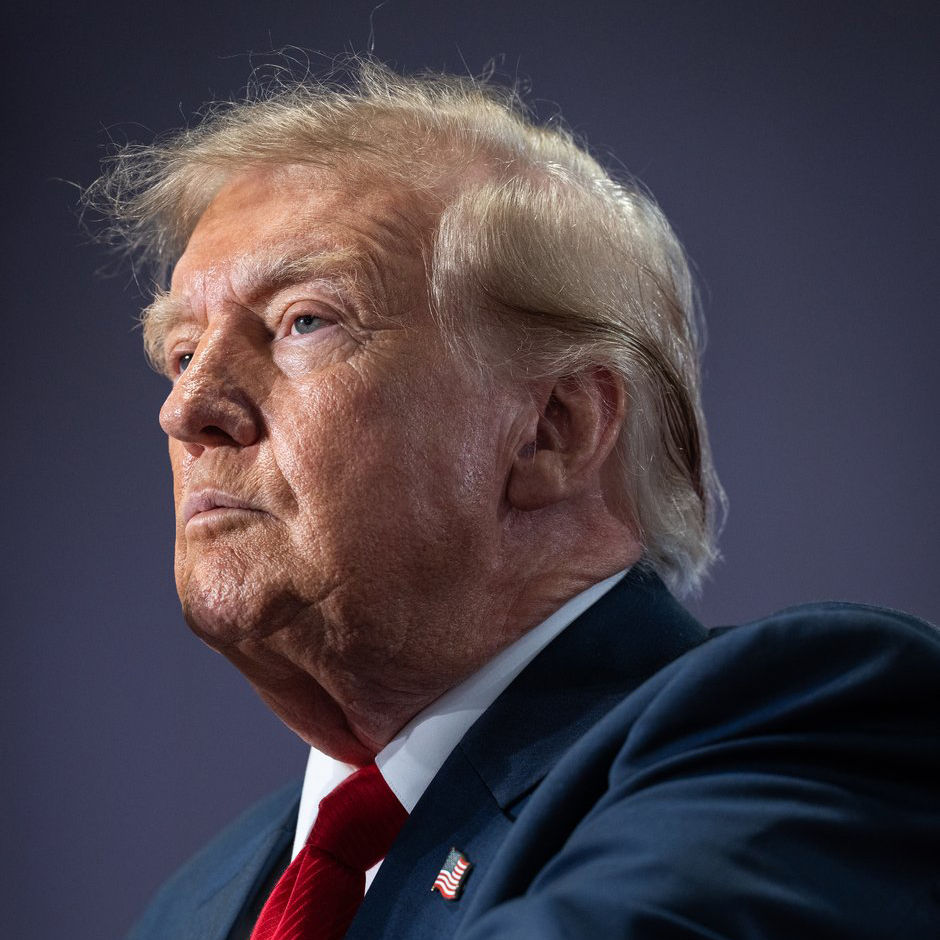
Federal judge approves Trump effort to obtain list of Jews from Penn.


By MICHAEL C. BENDER and ALAN BLINDER
The Trump administration was within its rights to demand that the University of Pennsylvania turn over information about Jews on campus as part of a federal investigation into discrimination at the school, a federal judge decided Tuesday.
The government’s investigation had united Penn leaders with Jewish students and faculty members as they opposed the Equal Employment Opportunity Commission’s subpoena. Many on campus drew parallels between the government’s approach and methods deployed in Nazi Germany.
But the Trump administration has said that its request was typical for discrimination investigations to seek potential victims and witnesses, and Judge Gerald J. Pappert of Philadelphia’s U.S. District Court agreed on Tuesday. He gave Penn until May 1 to comply with the administration’s subpoena, though the ruling appeared unlikely to quell the debates around how the administration has pressured top U.S. universities.
Pappert, an appointee of former President Barack Obama, appeared to hint at the discomfort that the government’s subpoena had prompted and at the accusations that the EEOC had gone too far with its tactics, especially a demand for information tied to groups “related to the Jewish religion.”
“Though ineptly worded, the request had an understandable purpose — to obtain in a narrowly tailored way, as opposed to seeking information on all university employees, information on individuals in Penn’s Jewish community who could have experienced or witnessed antisemitism in the workplace,” Pappert wrote in his 32-page opinion, issued three weeks after he heard oral arguments.
Ultimately, Pappert said, Penn’s constitutional claims were “easily dispensed with” and the government’s subpoena was valid.
Penn said in a statement Tuesday that it would appeal the ruling and that it was “committed to confronting antisemitism and all forms of discrimination.”
“While we acknowledge the important role of the EEOC to investigate discrimination, we also have an obligation to protect the rights of our employees,” the university said. “We continue to believe that requiring Penn to create lists of Jewish faculty and staff, and to provide personal contact information, raises serious privacy and First Amendment concerns.”
The university added that it did not “maintain employee lists by religion.”
A spokesperson for the EEOC declined to comment.
The EEOC has been pursuing an inquiry into potential workplace discrimination against Jewish faculty and staff at Penn, an Ivy League school in Philadelphia, since 2023. While university officials said they welcomed the investigation, they balked last year after the government issued a subpoena seeking, among other records, names and phone numbers of employees who were members of Jewish groups on campus.
The government also sought information about workers who had reported harassment or worked in Penn’s Jewish studies program, as well as details about listening sessions about antisemitism.
The university and Jewish groups on campus warned that the demands could chill religious life at Penn, discouraging membership in various groups.
Penn also said that it did not have “possession, custody or control” of membership lists of Jewish groups on campus. In his ruling Tuesday, Pappert said the university would have to share the information it had but that Penn would not have to reveal any employee’s connection to “a specific Jewish-related organization.”
Pappert was also particularly skeptical of the claim that the subpoena would endanger people, writing that there was “no evidence” that was the case.
“Comparing the EEOC’s investigation into antisemitism at Penn with Nazi Germany is counterproductive,” he wrote.
The case has represented a test of how far the government can go to investigate its suspicions of antisemitism in higher education, and Pappert’s decision could shape how aggressively the Trump administration pursues inquiries on other campuses.
Norman L. Eisen, executive chair of Democracy Defenders Fund, which opposed the subpoena on behalf of several Penn organizations, said the group “respectfully but strongly” disagreed with the decision.
“The court acknowledged that the subpoena sought information pertaining to people’s faith, making its request more intrusive and calling for greater sensitivity,” Eisen said. But, he said, “the core problem remains: forcing disclosure of individuals’ religious affiliations conflicts with the First Amendment.”
He also said he was weighing an appeal.
Others said the ruling could allow for intensified federal scrutiny of people besides Jews at Penn.
“Complying with the subpoena as it is is a threat to the safety and privacy of Jews and, by extension, to any other minority group,” said Lorena Grundy, the vice president of Penn’s chapter of the American Association of University Professors, which had joined the litigation.
The investigation into Penn began at the request of Andrea Lucas, a Republican commissioner on the EEOC who is now its chair. She said the concerns were based on news articles, public statements from university leaders and congressional testimony showing a pattern of antisemitism at the school.
Lucas filed her complaint in 2023, but the investigation did not ramp up until last year as the Trump administration began a far-reaching pressure campaign to force its policy agenda on the nation’s top colleges.
The EEOC lawyer leading the investigation, Debra M. Lawrence, who has worked for the agency under seven different presidents, described it as a common request for investigations. The commission was given broad investigatory powers by Congress to enforce prohibitions against workplace discrimination in the Civil Rights Act of 1964.
The Trump administration has repeatedly adopted a hard line toward elite universities, regarding them as hostile to conservative ideology and as hot spots of discrimination. Last year, the government paused $175 million in federal funding to Penn amid a dispute about a transgender swimmer before the sides reached a settlement.