Gov’t rejects LUMA’s $1.3 billion cost estimate, says 70% is unrelated to transition

By THE STAR STAFF
The Puerto Rico government on Tuesday rejected the $1.3 billion figure presented by LUMA Energy to the Supreme Court regarding the potential annulment of its contract extension, maintaining that nearly 70% of that amount consists of operational balances, accounts payable, and other obligations that would not be triggered by a change in operator.
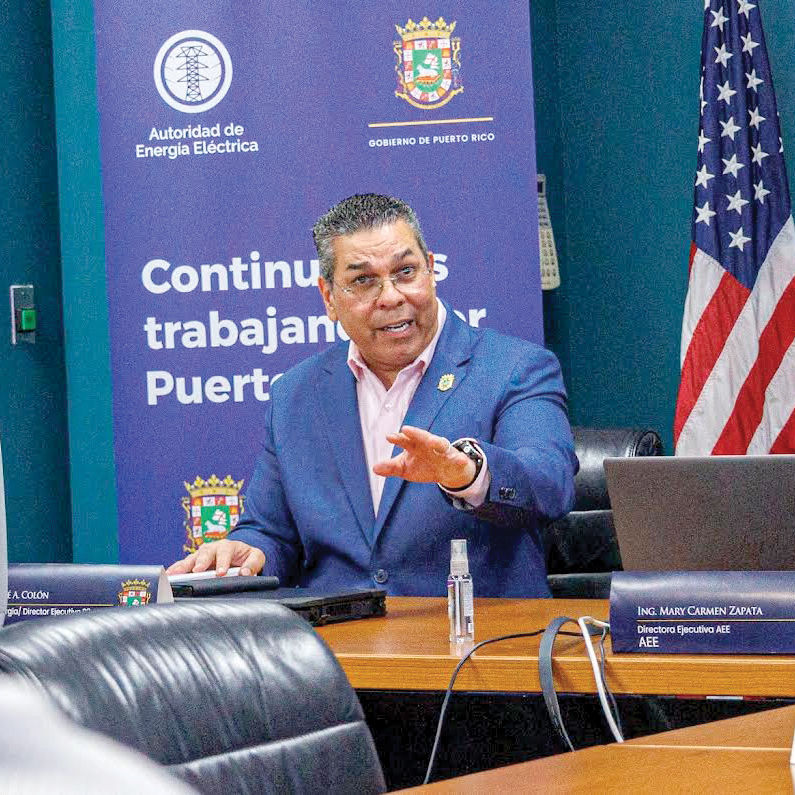
“This administration is defending the people of Puerto Rico against a company that provides them with substandard essential service; that is why we will not stand idly by,” Energy Czar Josué Colón Ortiz said in a written statement. “Our people pay for a service and have the right to receive it reliably and efficiently. Faced with LUMA’s failures to meet its obligations, our administration will continue to use every tool at its disposal to demand results, exercise firm oversight, and defend our people’s interests above any contract or company.”
The response from the government, the Public-Private Partnerships Authority (P3A), and the Puerto Rico Electric Power Authority (PREPA) follows LUMA’s claim on Monday that invalidating the so-called “Extension Letter” would trigger some $1.3 billion in costs and obligations, of which it estimated at least $726 million would be unavoidable.
According to the executive branch, PREPA does not owe LUMA the amounts making up nearly 70% of that estimate, and the system’s liquidity issues cannot be attributed to a potential transition.
Colón Ortiz noted that the current contract holds LUMA responsible for preparing and managing operational budgets, billing and collections, managing federal fund reimbursements, and controlling operating expenses, as well as managing revenue and addressing losses linked -- among other factors -- to energy theft. The government maintained that those obligations exist regardless of whether the operator is replaced, and it questioned LUMA’s decision to present them now as part of the cost of terminating its involvement in the electrical system.
LUMA had factored a contractual termination fee into its calculations, along with costs associated with the transition out and the entry of another operator, as well as funds PREPA would need to keep available for operational expenses and outstanding supplier accounts.
The company also warned the Supreme Court of potential consequences for federal reconstruction funds and argued that the government had failed to present a concrete plan to replace it.
The Executive branch rejected the notion that those economic projections alter the core issue before the Supreme Court: whether the extension agreed upon in November 2022 was authorized in accordance with applicable laws and regulatory requirements.
The position of the government, the P3A and PREPA is that the Extension Letter materially modified the previously approved agreement by eliminating a fixed end date for the interim period, and that those changes necessitated renewed compliance with legal and regulatory requirements.
LUMA maintains the opposite, arguing that the extension was contemplated in the original supplemental contract and did not constitute a new contract or a modification requiring a repeat of the approval process.
In its response, the government also rejected the argument that retaining LUMA necessarily represents the most stable option for the grid, citing several blackout and outage events illustrating the company’s performance since 2021 to challenge that claim.
According to the government, LUMA has not conclusively established the causes of several of those failures, nor has it permanently corrected the conditions triggering recurring incidents at critical facilities.
The executive branch asserted that contractual, legal, and judicial mechanisms exist to maintain grid operations during a transition to another private operator, should the Supreme Court rule the extension agreement null and void.