


How Delta steered around airline industry chaos.

By NIRAJ CHOKSHI
The airline business is in turmoil. Spirit Airlines abruptly shut down this month. Jet fuel prices have risen around 50% because of the war with Iran. And some industry executives are publicly talking about the need for airline mergers.
But that tumult has barely touched Delta Air Lines and its CEO, Ed Bastian.
Delta is the most profitable airline in the United States, and its business is booming. The company has no interest in making any drastic changes, Bastian said in an interview near Delta’s Atlanta headquarters this month.
“Sometimes, if you have to make big decisions, you haven’t been making the right decisions all along,” he said. “It’s far more important to be making timely decisions as you go and have a strategy that you’re aligned with. And if you have to course-correct, if you have to tweak, you can do it without having to disrupt the organization.”
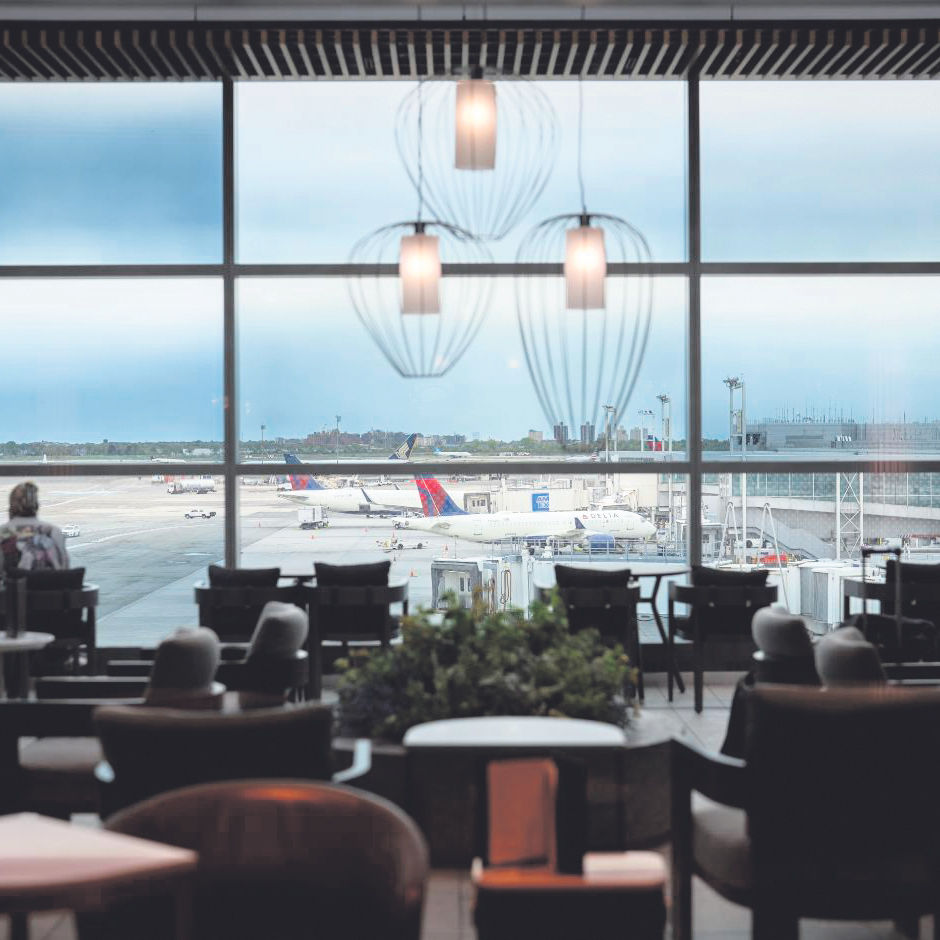
Delta has become the airline that others are trying to emulate and catch up to. For many years, the company has been courting well-heeled customers with perks such as spacious seats and luxurious airport lounges. That strategy helped Delta earn nearly $14.7 billion in profits over the past five years, nearly double the next-closest carrier.
The big question for Delta and Bastian, who became CEO in 2016, is whether the airline can stay on top. United Airlines, which is led by a CEO who recently proposed a merger with American Airlines, is trying to overtake Delta by also offering premium services and expanding rapidly.
The collapse of Spirit, once a very profitable company, is a reminder that there are no permanent victories in this business and that successful strategies can unravel quickly.
“There’s only one thing that can stop us,” Bastian told hundreds of employees at a meeting in Atlanta this month. “We start to believe that we’re better.”
The making of ‘a loyalty machine’
Delta’s strategy was born of failure. In 2005, the airline filed for bankruptcy protection, struggling with high costs and slumping sales after the terrorist attacks of Sept. 11, 2001. It had to find a way to reduce spending or get customers to pay more.
Bastian, then chief financial officer, said Delta executives had realized that the airline could not survive by only chasing travelers who shopped on price alone. So they decided to go after customers who would pay more for better service — an unconventional bet at the time.
The first step, Bastian said, was to improve Delta’s on-time performance, which attracted customers willing to spend more for consistency. Those flyers joined the airline’s loyalty program, signing up for credit cards offered by American Express — a partnership that brought in more than $8 billion for Delta last year. The airline also invested in lounges, planes, technology and employees in an effort to encourage customers to keep flying with it.
Two decades later, Bastian said, “our best customers don’t even look at the price” when booking tickets.
The airline’s approach was validated this month when Berkshire Hathaway disclosed that it had taken a more than 6% stake in Delta.
“You’re not necessarily investing as much in an airline as you are a loyalty machine,” said David Vernon, an airline industry analyst at Sanford C. Bernstein.
The stock market values Delta at around $50 billion. Its frequent flyer program, SkyMiles, is worth nearly two-thirds of that, or around $32 billion, according to On Point Loyalty, a consulting firm.
But customers who spend more also expect more, and Delta has sometimes struggled to keep them happy.
As SkyMiles became more popular after the COVID-19 pandemic, customers grew frustrated by crowded lounges and limited seat upgrades. So in 2023, the airline required members to spend more to earn benefits and limited lounge access. That incited a backlash, forcing Delta to walk back some changes.
Managing a growing workforce
During its bankruptcy, Delta executives started meeting with groups of hundreds of employees, many of them anxious and furious. The meetings took place in a dank building that used to be a Macy’s store in Atlanta.
These days the meetings, called Delta Velvet (a reference to the metaphorical velvet rope that executives are taking employees behind), are held around the country. Bastian speaks at more than a dozen annually, including one this month at a relatively new Hilton hotel in downtown Atlanta, where the mood was celebratory. Dozens of employees lined up to take photos with him after he spoke.
Bastian said Delta’s more than 100,000 employees were his top priority, above customers and investors. In recent years, Delta has handed out profit-sharing bonuses that were larger than those offered by other airlines.
“I don’t know how to fly the planes. I don’t know how to fix the planes,” Bastian said at this month’s event. “But I know how to find out what our people are feeling and make certain that we’re getting the support, the tools, the technology, the capabilities, the resources.”
Bastian credits his parents, a dentist and a dental hygienist, for giving him his earliest management lessons by teaching him how to lead and motivate his eight younger siblings. The family lived in Poughkeepsie, New York.
Airline employee relations are often fraught, marked by drawn-out contract negotiations with unions that represent pilots, flight attendants, baggage handlers and other workers. Delta has had to contend with its share of strife.
The company has struggled recently to recover from disruptions caused by storms and technology outages. Its pilots’ union has said those problems could have been avoided had the airline been better prepared, including by hiring more staff. Bastian disagrees with that assessment, but said the airline and pilots’ union were working to make improvements.
The challenger who likes to make big bets
Bastian, 68, said he had learned early in his career that it was better to develop and refine strategies without making bet-the-farm decisions in one go.
“I think you learn to have confidence in your decision-making capabilities by making them smaller, making them faster, so that when you have to make a change, you can do it without creating big risk,” he said.
That approach is a contrast to perhaps his most formidable business rival, Scott Kirby, the CEO of United. Kirby’s audacious proposal to merge with American would have created the world’s largest airline and drawn significant scrutiny from antitrust regulators. American, where Kirby previously worked, rebuffed him.
In an interview with The New York Times last month, Kirby said Delta had been the first U.S. airline to lure travelers with more premium services and get them to become loyal to it. But Kirby said United was now doing it better.
“They’re still really good, but we passed them,” he said.
United flies to more international destinations than any other U.S. airline and is expanding its premium options. The carrier plans to add 250 new planes over the next two years. It also plans to install the Starlink internet service, which is much faster than standard airline Wi-Fi, to all its planes by the end of next year.
Delta is adding new international flights and will bring on as many new planes as United but over a slightly longer period. It plans to install Amazon’s Leo satellite service but not until 2028.
Bastian acknowledged that United had gained some ground. But where it matters most, he added, the gap “isn’t shrinking.” He noted that Delta’s share price is higher today than before the start of the war in Iran, which is not true for shares of United and other major U.S. airlines.
“That’s the market telling you what they think about the durability and the differentiation of the Delta experience,” he said.


