Nick Pope, UFO sleuth who chased the truth, dies at 60.

By MICHAEL S. ROSENWALD
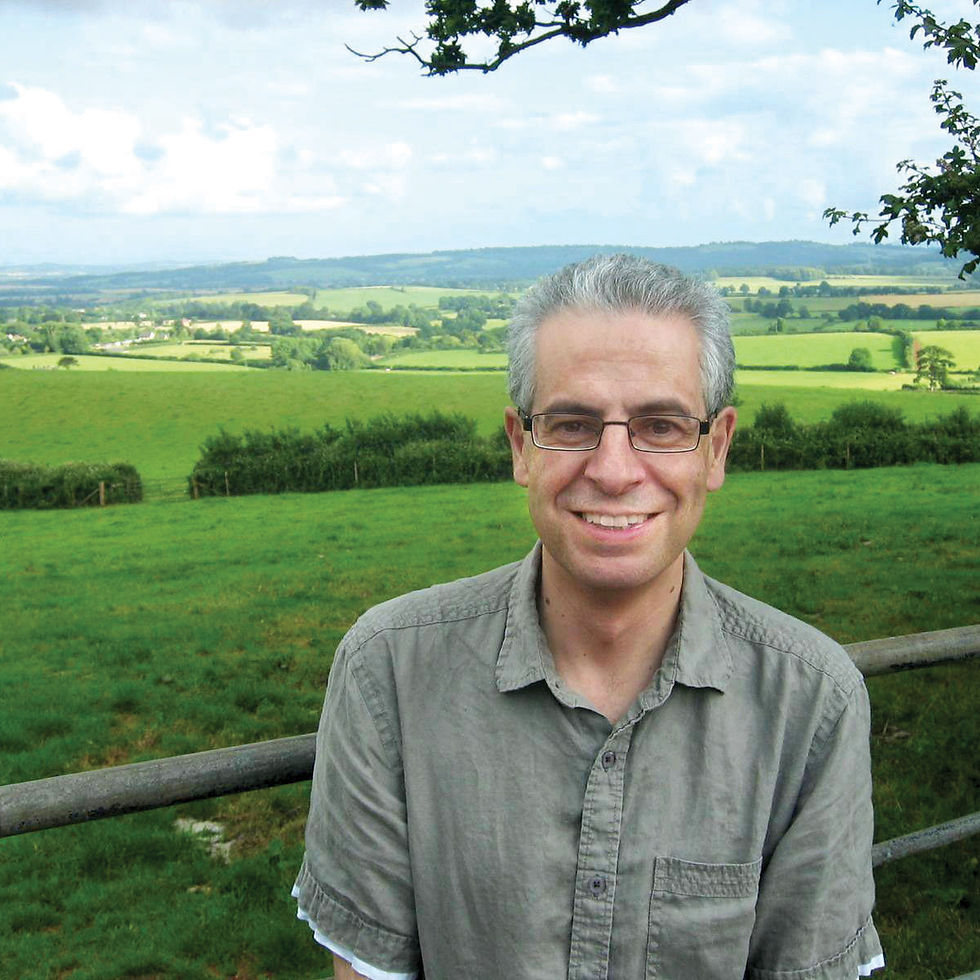
Nick Pope, who investigated UFO sightings for Britain’s Ministry of Defense, a position that turned him from skeptic to believer and later made him one of the world’s most respected ufologists, often likened to FBI agent Fox Mulder on “The X-Files,” died on April 6 at his home in Tucson, Arizona. He was 60.
The cause was esophageal cancer, said his wife, Elizabeth Weiss, an anthropologist whom Pope referred to as the real Dana Scully, Agent Mulder’s skeptical partner on the long-running Fox television drama about paranormal mysteries.
After leaving his UFO post at the ministry in 1994, Pope appeared frequently on the History Channel documentary series “Ancient Aliens”; commented on extraterrestrial matters for TV news programs; and consulted on Hollywood projects like Steven Spielberg’s film “War of the Worlds” (2005), based on the H.G. Wells novel about a Martian invasion of Earth, and a reboot of “The X-Files.”
Mild-mannered, with a dry British wit and the genial disposition of a curious academic, Pope was a well-grounded voice of restraint on a subject often prone to spiraling into conspiracy and spectacle.
“He was smart enough to avoid the pitfalls in this field where people, if they have even a little bit of knowledge, can get really fringy and weird,” Ralph Blumenthal, a former New York Times reporter and the author of “The Believer” (2021), about alien encounters, said in an interview. “He kept his bearings. He had humility.”
Pope entered the UFO universe in 1991, two years before “The X-Files” premiered.
A career civil servant, he had been working in air force operations at the Ministry of Defense when he was reassigned to a department that investigated UFO sightings. He was its only employee. Colleagues teased him, calling him “Spooky” and sometimes whistling notes from the score of Spielberg’s “Close Encounters of the Third Kind” as he walked by.
At first, he understood the mockery.
“I confess to being initially skeptical,” Pope wrote in an essay for The Guardian in 1997. “I believed UFOs were vague lights in the sky seen by people out late at night walking their dogs, perhaps on their way back from the pub.”
Still, he resolved to take his job seriously.
“I was going to call it how I saw it, and pay no attention to the personal prejudices of those who, quite frankly, wouldn’t admit there might be things they couldn’t explain even if a flying saucer landed in their back garden,” he wrote in his autobiography “Open Skies, Closed Minds” (1996). “Like Fox Mulder, I was the rebel, the man from the corridors of power who wouldn’t play by the same ‘establishment’ rules as everyone else.”
In one case, a man called to report that a UFO had just landed in Regent’s Park in London. Another time, he received a letter that said, “I am writing to you today with extraordinary news; there are aliens on my estate.” Fishermen called reporting strange lights. There was a man on a hike in Quantock Hills, in rural Somerset, who claimed he had seen a large, triangular-shaped craft with batlike wings.
Pope interviewed witnesses, checked military flight records, consulted astronomers and analyzed witness videos frame-by-frame. He determined that most reports were either hoaxes, delusions, or misidentifications of ordinary objects like weather balloons or aircraft lights.
There were 5% he could not explain.
After three years of investigating UFO sightings, he emerged a changed man.
“I consider myself to be intelligent and rational,” he wrote in “Open Skies, Closed Minds.” “A career civil servant with 10 years of experience at the ministry who has reached the ranks of middle management is not supposed to believe in an alien presence. Indeed, I started my tour of duty believing in aircraft lights, but I ended it believing in aliens.”
Nicholas George Pope was born in London on Sept. 19, 1965, to Geoffrey Pope and Rosemary (Harnden) Pope. His father was the deputy chief scientific adviser at the Ministry of Defense.
Pope joined the ministry when he was 19, working in jobs that included financial policy, counterterrorism and policing. At one point, he saved six cows, though he never explained why or how, simply saying it was a long story.
After he was rotated out of his post in 1994, Pope turned to book writing.
“Open Skies, Closed Minds” was a bestseller. The ensuing publicity tour established his bona fides as a UFO insider, even if he didn’t use that acronym himself. At the ministry, he was among the first to begin using the term UAP — unidentified aerial phenomenon — as a way of “shedding the tabloid baggage of ‘UFO,’” he wrote.
In addition to media appearances and public speaking events, Pope wrote guest essays in newspapers urging U.S. government officials to disclose what they knew on the subject.
“It would not imply that the country has suddenly started believing in little green men,” he wrote in the Times in 2008. “It would simply recognize the possibility that radar alone cannot always tell us what’s out there.”
Pope was overjoyed in 2017 when Blumenthal, along with Helene Cooper and Leslie Kean, published a major scoop in the Times revealing that the U.S. Defense Department had a top-secret program to investigate UFOs and other unexplained aerial phenomena.
“The real story here is the political one, in that for decades now the U.S. government said we are not interested in UFOs. We are not investigating them,” he told CBC radio in Canada. “Turns out they are. Their pilots are chasing them, and there’s this secret classified research effort to try and get to the bottom of the mystery.”
Pope met Weiss at a hotel where there was also a UFO convention. They married in 2011.
In addition to his wife, he is survived by a brother, Sebastian Pope.
Before he died, Nick Pope was hopeful that President Donald Trump would release everything the U.S. government knows about UFOs.
“If the U.S. government is aware of an extraterrestrial presence, Trump is more likely than any previous president to spill the beans,” Pope wrote in Skeptic magazine in February.
But he was also less sure about the existence of UFOs than he had been while working for the Ministry of Defense, writing that if Trump’s presidency “ends without disclosure, I’ll be 99.9% convinced that there’s nothing to disclose.”
The field was at a crossroads, he thought, and it was time for concrete answers.
“Ufology has come out of the fringe and into the mainstream,” he wrote, “but I believe there’s a distinct possibility that it will move out of the mainstream and back into the fringe.”
Pope wouldn’t live to find out. He was fine with that.
“I’m grateful for the things I’ve done,” he wrote in a note to fans before his death, “not mournful for the things that I won’t now get to do.”