PDP positions itself as a centrist, autonomist party

Plans 10‑year gov’t program
By THE STAR STAFF
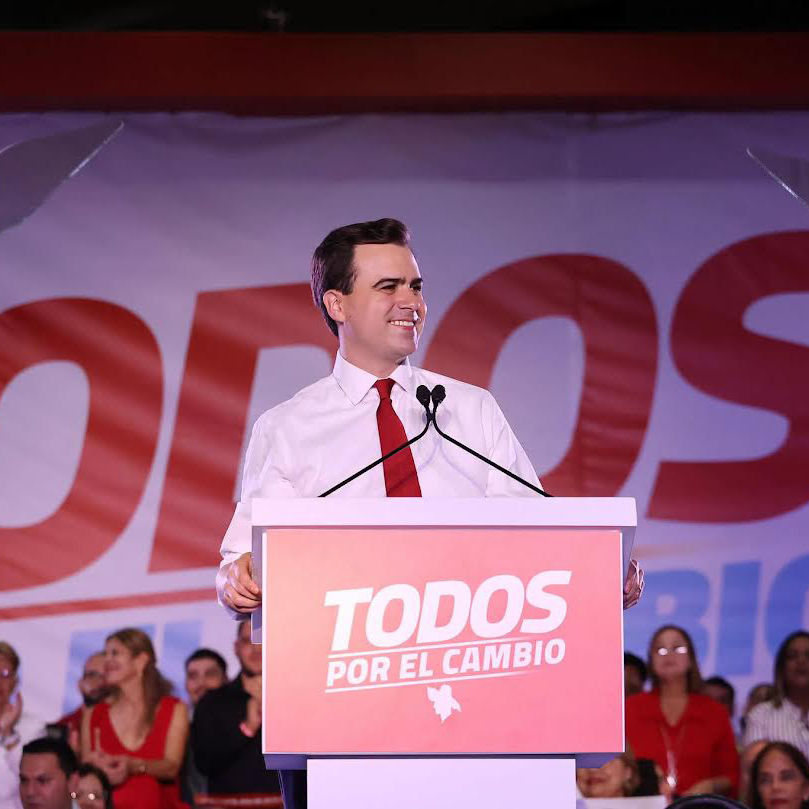
The Popular Democratic Party (PDP) has moved to redefine its ideological identity, with party president and Resident Commissioner Pablo José Hernández Rivera presenting a new philosophy that frames the organization as a centrist and autonomist political force.
Hernández Rivera also announced plans to draft a 10‑year government program aimed at long‑term structural reforms.
Speaking before delegates gathered at the PDP General Assembly at the Ponce Convention Center on Sunday, Hernández Rivera said the party’s renewed philosophy centers on prioritizing “the human being, the Puerto Rican, and their material and spiritual needs for bread, land, and liberty.”
He told members that the reorganization of the PDP rests on three pillars: a new structure, new leadership, and a new philosophy. The updated ideological stance, he said, will be submitted to the party’s newly elected governing board.
Hernández Rivera explicitly defined the PDP as a centrist party, rejecting the notion that centrism signals ideological weakness. “Being in the center is not, as some will say, being lukewarm,” he said. “On the contrary, it is refusing to accept the false dilemmas in which they sometimes try to place us.”
He argued that the party should not be forced to choose between crime prevention or punishment, environmental protection or economic development, government aid or workforce participation, or private enterprise or social justice. He also reaffirmed support for the separation of church and state, rejected discrimination, and said existing rights must be protected.
On economic policy, Hernández Rivera described the PDP as “the party of social justice,” saying Puerto Rico must generate wealth and distribute it in ways that improve conditions for those with the greatest needs.
He also proposed significant changes to Puerto Rico’s democratic structure, including a runoff election when no gubernatorial candidate secures a majority, citizen‑driven mechanisms to propose or repeal laws through referendum, participatory budgeting in communities, and a process to remove a government before completing its four‑year term.
“We want the people to once again decide the public policy of their government,” he said, linking these reforms to his call for “more power to the people.”
Hernández Rivera reiterated the party’s opposition to the federal Financial Oversight and Management Board, saying the PDP seeks to end its presence through responsible governance that restores market confidence.
“With a responsible government philosophy that does not spend more than it collects, we will remove the Board,” he said.
On political status, he reaffirmed the PDP’s autonomist identity and its commitment to maintaining and improving the commonwealth.
“The Popular Democratic Party is autonomist. The Popular Democratic Party believes in maintaining and improving the Estado Libre Asociado,” Hernández Rivera said, adding that status should be a means to improve Puerto Ricans’ well‑being, not the party’s ultimate goal.
He also predicted that Puerto Rico’s political status will not change “in the near future.”
Turning to the 2028 elections, Hernández Rivera called for a change in government and criticized Gov. Jenniffer González Colón, Senate President Thomas Rivera Schatz and the rest of the New Progressive Party leadership.
“We have to change the governor,” he said. “We have to change the speaker of the House of Representatives. And we have to change the president of the Senate.”
Still, he warned that the PDP cannot rely solely on voter dissatisfaction.
“In the past we could win by being the least bad. That’s over,” Hernández Rivera said. “To win we have to be the best. To win we have to represent the change and hope that so many Puerto Ricans seek.”
As the next step in the party’s reorganization, Hernández Rivera announced the creation of a 10‑year government program focused on long‑term structural change. He said the plan will prioritize “fixing the basics,” restoring good governance, and expanding citizen participation, with emphasis on electricity, water, health, education, public safety and housing.
The PDP president said more than 7,000 members voted during the assembly to elect the new governing board, a turnout he described as evidence of strong participation in the party’s reorganization process.