Trump panel calls for FEMA overhaul.

By SCOTT DANCE
An expert panel appointed by President Donald Trump recommended late last week that the Federal Emergency Management Agency make changes that could speed the flow of federal disaster aid to communities but also shift more responsibility and costs onto states.
Members of the panel described a disaster agency that they said has gotten too involved in long-term recovery efforts and become political, specifically criticizing its actions to help states during the coronavirus pandemic. Changes they recommended — which they acknowledged would require action by Congress — included significant overhaul of the way FEMA helps state and local governments pay for recovery and provides housing to disaster survivors.
“We need to refocus FEMA to get it back on what its mission originally was,” said Markwayne Mullin, the homeland security secretary. FEMA is part of the Department of Homeland Security.
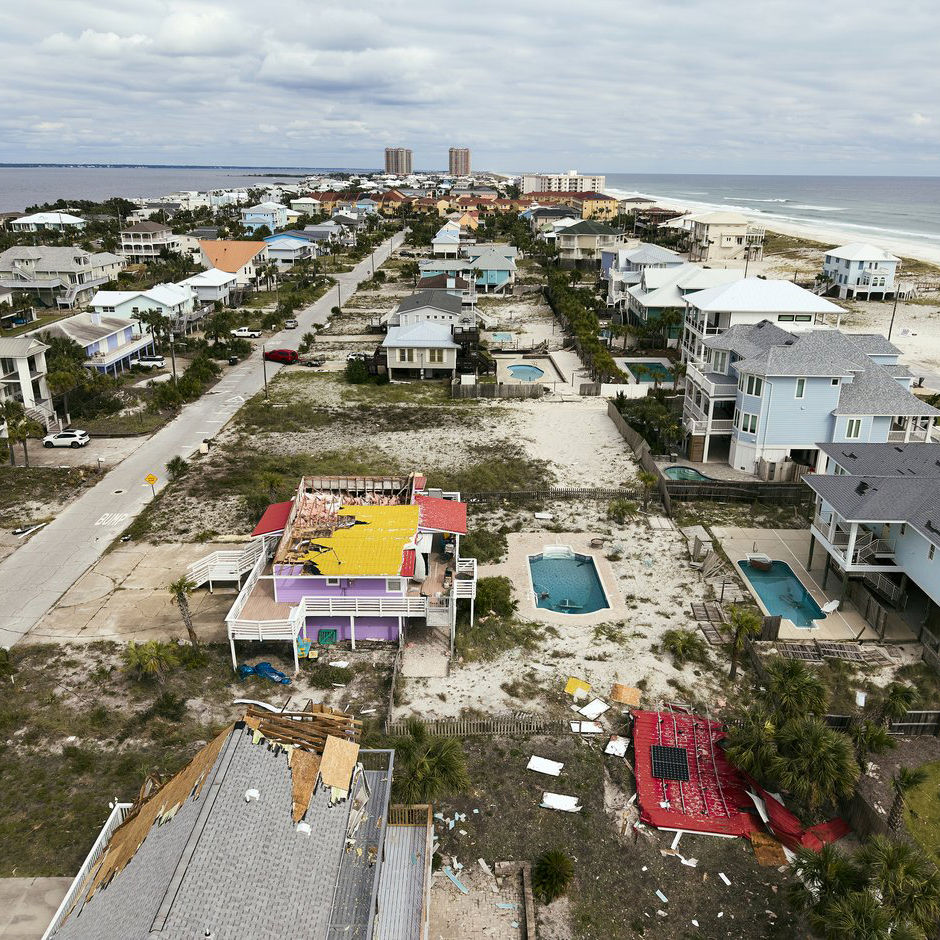
The proposed changes come as climate change is fueling more destructive weather around the nation, from floods to fires. Disasters causing at least $1 billion in damage cost the United States more than $100 billion last year, according to researchers at Climate Central, a nonprofit group. Scientists say that the planet is likely to experience an especially strong El Nino weather pattern later this year and into 2027, which could deliver powerful rainfall and other extreme events in different parts of the country.
The release of the report could accelerate changes to the disaster agency that state and local emergency officials have been forced to adapt to since Trump’s second term began last January. The president has said he believes FEMA’s work is too expensive and inefficient, a view that is shared by many emergency managers, and that governors should be able to handle more events on their own.
But critics raised concern about whether all state, tribal and territorial governments would easily be able to fill a void left by FEMA. In many rural areas, for example, FEMA funding pays much of emergency managers’ salaries and provides training that prepares them for disasters.
Since last year, communities have waited longer than ever to learn whether Trump will approve their requests for federal disaster aid, according to a New York Times analysis. The process through which the federal government reimburses state and local counterparts for disaster response and recovery expenses has always been bureaucratic, but Trump administration efforts to scrutinize that spending has at times created large backlogs of aid owed to states and left communities unsure of what help, if any, they can expect from FEMA.
Many of the report’s proposals would require legislation, though there are some steps the Trump administration could take on its own to reshape FEMA’s role in disasters. A bill with bipartisan support includes proposals similar to the recommendations released Thursday but has been stalled since September.
The 10 members of the panel, known as the FEMA Review Council, include current and former emergency managers and government executives, largely from disaster-prone states in the South, including Florida, Mississippi, Louisiana and Texas. All but three are Republicans.
Though Trump had suggested early in his second term that FEMA should perhaps “go away” altogether, the panel’s members quickly concluded that the agency should be overhauled, but not abolished.
The group had been set to release its recommendations in December, but minutes before it was scheduled to start, that meeting was postponed indefinitely, even appearing to catch Kristi Noem, then the homeland security secretary, by surprise. Twice since then, Trump issued executive orders to extend the timeline for the group’s work.
Among the panel’s recommendations released Thursday: Replacing the reimbursement process for disaster aid with one that delivers money more quickly and directly. Rather than basing aid totals on time-consuming surveys of actual damage, FEMA would use factors such as hurricane wind speeds or the height of floodwaters to determine how much money a disaster-struck community would be eligible to receive, paying out that amount within 30 days.
The group also recommended that FEMA play a smaller role in housing disaster survivors. It suggested that FEMA give up efforts to help survivors secure long-term housing. And it proposed that FEMA should help house only people whose homes are uninhabitable, and not those whose homes are damaged but not destroyed.
That could mean disaster survivors can’t turn to FEMA for help covering medical costs, funeral expenses or transportation barriers tied to a disaster, said Madison Sloan, director of a disaster recovery and fair housing project at Texas Appleseed, a nonprofit focused on social, economic and racial justice.
“There’s no help for you if your home wasn’t destroyed,” Sloan said. She also raised concern about state and local governments’ abilities to take on more responsibility for disaster response, with no assurance they will be able to afford that work on their own.
In a statement, the National Emergency Management Association, an organization representing state and local emergency managers across the country, said it “broadly supports” the review council’s call to make FEMA programs less complex. The nonprofit called for any changes to occur over several years to give state and local governments time to adjust.
The FEMA panel’s 75-page report also called for a private takeover of the National Flood Insurance Program, which guarantees coverage to residents but has become insolvent as claims have skyrocketed and coastal development has increased in recent decades. Some in the insurance industry had lobbied the Trump administration, saying there was appetite for companies to take on more of the flood insurance market.
FEMA, which dates to 1979, was moved into the Department of Homeland Security when the department was established in 2003, but its place there has been at issue almost as long, based on concerns that go back to Hurricane Katrina in 2005. Mismanagement by homeland security officials was found to have contributed to FEMA’s bungled response to that disaster, prompting passage of a law that sought to give the disaster agency a measure of independence while stopping short of making it independent again.
It will be up to Mullin, the former Republican senator from Oklahoma who was confirmed as homeland security secretary in March, to steer changes to FEMA policy. So far, he has taken steps to reverse actions by Noem to rein in FEMA, rescinding a rule requiring review of expenses of at least $100,000 and reversing some FEMA employees’ dismissals.
Trump is said to be planning to nominate Cameron Hamilton, a former Navy SEAL who briefly led FEMA on an acting basis last year, as the agency’s administrator. Though this nomination has not been announced, Mullin made reference to Hamilton during Thursday’s meeting, telling Robert Fenton, a FEMA regional administrator and member of the panel, that “Cameron sings your praises.”
It was not clear if the Republican-controlled Congress would take steps to adopt any of the proposals with the midterm elections approaching.
Legislation introduced last July known as the FEMA Act of 2025 has gained the support of a bipartisan group of 69 co-sponsors, and in September, a House committee voted 57-3 to advance the bill. But since then it has languished as leaders waited for the review council’s report.
The bill’s lead sponsor, Rep. Sam Graves, R-Mo., said the overhaul recommended Thursday “closely conforms with” the FEMA Act and said he would work with the Trump administration to pass legislation “that will ensure FEMA works for taxpayers and communities hit by disasters.”
The panel’s members said any overhaul should be significant. “What we see here is a need to change, and it has to happen and it can’t be trimming around the edges,” said Glenn Youngkin, the former Republican governor of Virginia.