Water & power agencies tell Senate they can’t support Esencia’s demands

By THE STAR STAFF
Puerto Rico’s water and power authorities told lawmakers Thursday that they lack the capacity to meet the massive water demand of the proposed Esencia luxury development in Cabo Rojo, a disclosure that immediately raised questions about how the project’s land‑use consultation was approved in the first place.
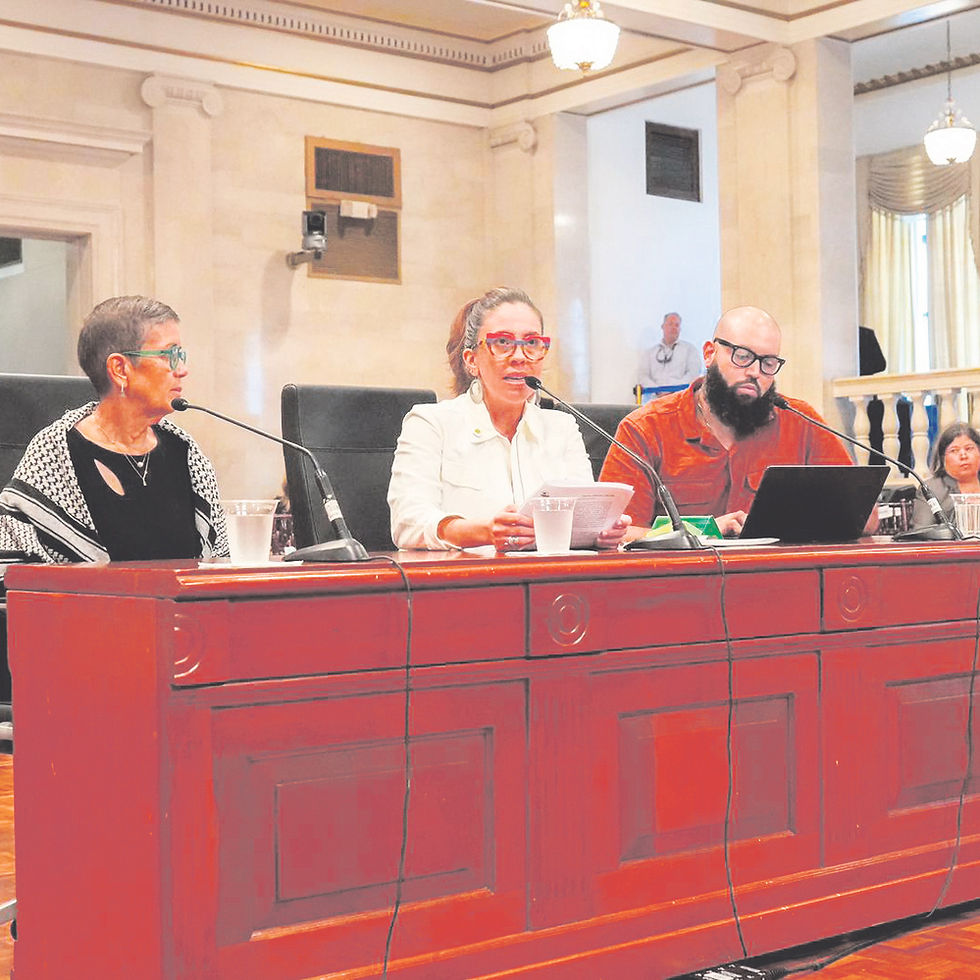
During a public hearing of the Senate Committee on Innovation, Reform and Appointments, the Puerto Rico Aqueduct and Sewer Authority (PRASA) and the Puerto Rico Electric Power Authority (PREPA) reiterated that their existing systems cannot supply the project, which would span some 1,942 acres (more than 2,000 cuerdas) of land. Senate President Thomas Rivera Schatz said the testimony directly contradicts the Office of Permit Management (OGPe), which cleared the project’s location consultation.
“They are presenting the official position of each agency,” Rivera Schatz said after the hearing. “Both made clear there is no available infrastructure to supply water to this project. They said Esencia would have to provide its own water.”
PREPA’s written testimony stated that the Lajas Valley irrigation system “does not have available hydric capacity for new demands,” noting that its resources are already committed to agriculture and PRASA’s stable water system. PRASA echoed the warning, saying its infrastructure “does not have the capacity to supply the project’s demand.”
Esencia’s initial proposal sought 1.253 million gallons per day from the Betances filtration plant, which PREPA says is fully supplied by the Lajas Valley. Developers later shifted strategy, proposing private infrastructure including a groundwater treatment plant capable of producing 1.5 million gallons per day, plus a wastewater treatment facility. They also left open the possibility of connecting to PRASA’s potable water system as an emergency backup.
PREPA cautioned that relying on wells as the primary water source requires “detailed” evaluation, warning that the region’s aquifers already show signs of over‑extraction, saltwater intrusion and limited recharge capacity. Additional pumping, the agency said, “could provoke degradation of the resource.”
PRASA officials were equally blunt. When Rivera Schatz asked whether Esencia could rely on government systems, engineer Ann Ventura replied: “Our position is that our system does not have the capacity.” When pressed further, she confirmed: “Exactly, yes.”
Environmental advocates seized on the testimony. Guarionex Padilla Marty, spokesperson for Defiende a Cabo Rojo, said the agencies’ statements validate community concerns that new wells could trigger catastrophic saltwater intrusion affecting ecosystems near Peñones de Melones.
Lawmakers also questioned OGPe’s evaluation process. PREPA officials said they lacked access to the Single Business Portal during the project’s review because permit‑commenting responsibilities had been transferred to LUMA Energy. Even so, PREPA said it sent two letters to OGPe warning that water supplies were insufficient.
The Tourism Company, which also testified, noted that Esencia’s access to more than $497 million in tax credits hinges on meeting multiple eligibility requirements, including proof of actual investment.
Rivera Schatz said a second hearing will be held next Tuesday and expects OGPe, the Department of Natural and Environmental Resources and the project’s developers -- Three Rules Capital and Reuben Brothers, through Cabo Rojo Land Acquisition -- to appear.