


An easy holiday feast that won’t break the bank

By MELISSA CLARK
“Pork shoulder is so easy, it’s almost like cheating,” my friend Zoe said on a recent winter afternoon.
We were discussing possible meaty mains for an upcoming holiday party, looking for something impressive but low-stress and economical enough for a crowd. Finding that balance can be tricky.
One by one, we nixed the usual holiday options. Standing rib roast and beef tenderloin are opulent but expensive and potentially challenging to get right. Lamb and veal shanks are more reasonably priced and feel special, but they can be hard to find and aren’t inherently crowd-pleasing. Turkey? Been there, done that much too recently to make again so soon.
We kept circling back to pork, specifically the shoulder, which ticked all the boxes — accessible, inexpensive and about as forgiving as meat gets. Why reject it just because — for our party at least — it was perfect?
The next question was whether to roast it or braise it. Both methods have their merits. Slow-roasting a large pork shoulder results in a hulking centerpiece, crowned with glossy, irresistible cracklings. But it’s best cooked the same day as the party, keeping the oven occupied for hours.
Braising can be done a day or two before, and it makes the pork all the better, turning it silky and supple, and imbuing it with whatever flavors you’ve added to the pot. And it frees the oven and the cook for other pursuits on party day.
Pork shoulder is easy to find in the supermarket once you know what to look for. The shoulder is made up of two parts, the butt, sometimes called Boston butt, which is taken from the upper part of the shoulder, and the picnic cut, which is lower down. The butt is slightly fattier and tends to fall apart; the picnic is slightly leaner and holds its shape. Both are good for braising — as is anything called pork stew meat, which is also cut from various parts of the shoulder. Remember what I said about forgiving?
You can braise pork shoulder with practically any combination of liquid and aromatics. For this recipe, I combined olives, lemon and tomatoes to make a bright and lively sauce that contrasts with the rich, succulent meat.
The result is a dish that tastes as if you fussed for hours, when, really, the pork itself did most of the work. And you get to take all of the credit.
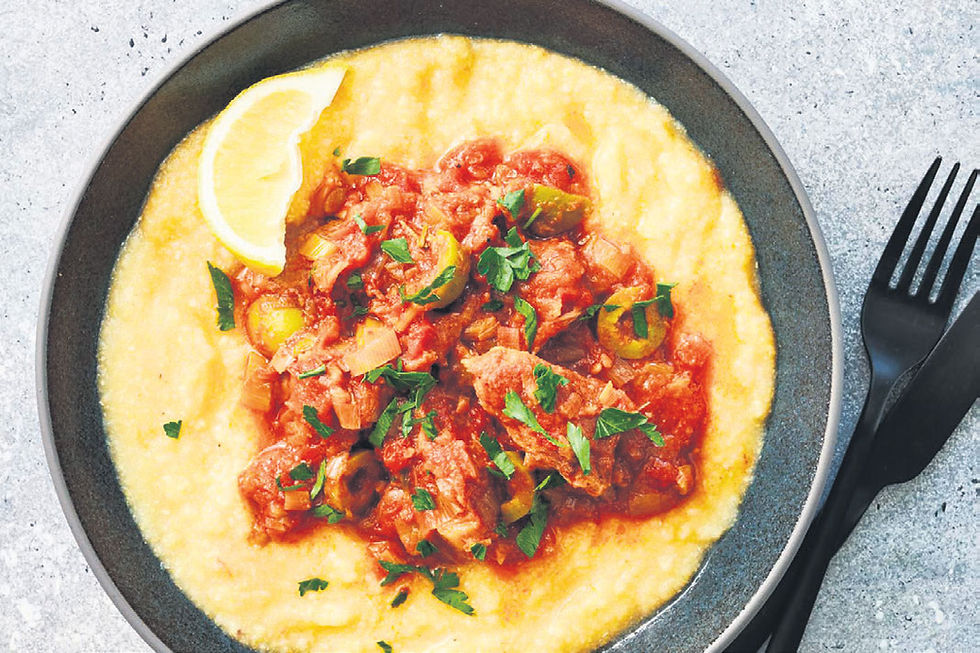
Braised pork with lemon, olives and tomatoes
Pork shoulder is such a forgiving cut of meat. No matter how you cook it — low and slow, hot and fast, on the grill or in a Dutch oven — it comes out tender, rich and brawny, and able to take on the other flavors in the pot. Here, boneless chunks are gently braised with tomato, cinnamon and olives for a deeply flavored stew that feeds a crowd and can be cooked entirely in advance. It makes a good amount of savory, gently spiced sauce, so be sure to serve it with something to catch every drop, like polenta, noodles or rice.
By Melissa Clark
Yield: 8 servings
Total time: About 3 hours
Ingredients:
3 pounds boneless pork shoulder or butt, cut into 2-inch chunks
2 1/2 teaspoons fine sea or table salt and freshly ground black pepper, more to taste
1 teaspoon ground coriander
3 tablespoons olive oil, more as needed
2 large leeks, white and light green parts only, sliced
8 garlic cloves, smashed and peeled
1 (28-ounce) can whole plum tomatoes
1 1/2 cups dry white wine
5 anchovies (optional)
1 (2-inch) cinnamon stick
2 bay leaves
4 rosemary sprigs
1 to 2 lemons
1 cup pitted and torn green olives
Chopped fresh herbs, such as parsley or mint (or celery leaves), and cooked polenta, noodles or rice, for serving (optional)
Preparation:
1. Season the pork shoulder with 2 teaspoons salt, plenty of pepper and the coriander. If you have time, let it sit at room temperature for 30 minutes or covered overnight in the refrigerator. Heat oven to 325 degrees.
2. In a Dutch oven over medium-high heat, warm the olive oil. Sear the pork in batches, turning, until it is well browned all over, about 3 minutes per side. Transfer the pork to a plate as it browns.
3. Reduce heat to medium. Add the leeks, garlic, and pinch of salt. Add a drizzle of oil if the pan looks dry, and cook until golden brown at the edges, 4 to 6 minutes.
4. Stir in tomatoes, wine, anchovies (if using), cinnamon stick, bay leaves, rosemary and remaining 1/2 teaspoon salt. Bring liquid to a simmer, scraping up the browned bits on the bottom of the pan.
5. Return the pork and any accumulated juices on the plate to the pot. Place pot in the oven and cover it most of the way, leaving a tiny crack. Cook for 45 minutes. Turn the pork pieces and stir the pot, then continue cooking, mostly covered except for a crack, for 45 minutes longer.
6. Meanwhile, grate the zest from 1 lemon and stir it into the olives. Cut the bald lemon in wedges for serving. Reserve remaining lemon for serving.
7. Raise the oven temperature to 425 degrees. Uncover the Dutch oven, turn over the pork pieces and stir in the lemon zest-olive mixture. Continue cooking, uncovered, until the meat is very tender, 20 to 45 minutes more, occasionally giving everything a stir. At this point, you can let it cool, then store it in the refrigerator for up to 5 days (see Tip), or taste and add more salt if needed. If you think it needs more lemon, grate the zest from the remaining lemon into the pot. Top with herbs and serve with lemon wedges on the side for squeezing.
Tips:
If you have made this ahead of time, let it cool so the fat has a chance to rise to the surface, then spoon it off if you like. Reheat if necessary over low heat.


Comments