


Lawmaker: Prohibition on drones at national parks, airports etc. is not new
- The San Juan Daily Star

- Feb 13
- 2 min read
By THE STAR STAFF
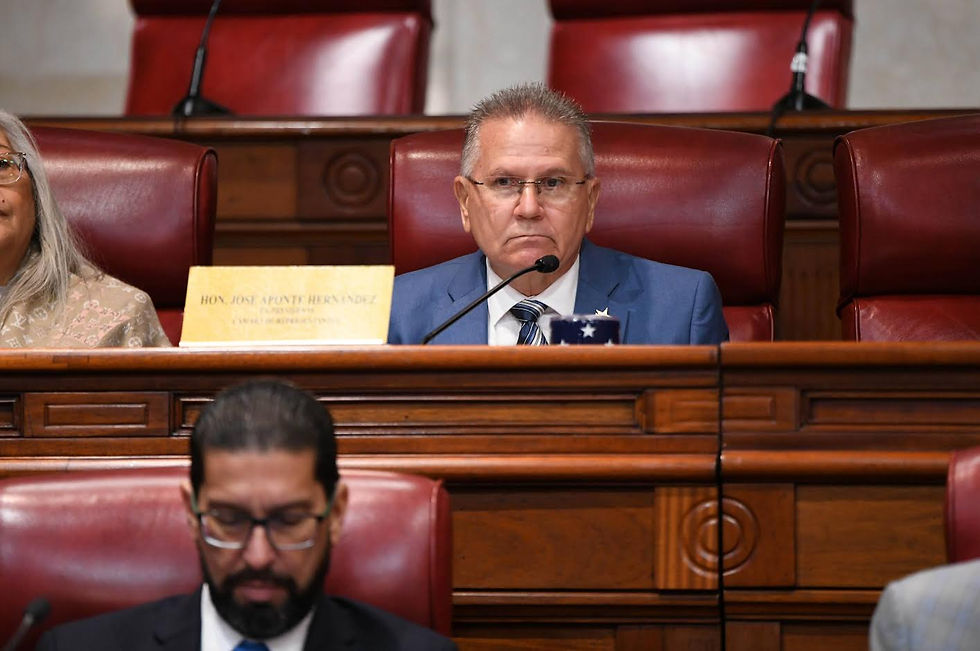
Rep. José Aponte Hernández, chairman of the House Committee on Federal and Veterans Affairs, reiterated Thursday that the use of unmanned aerial vehicles, better known as drones, is prohibited by federal regulations in airports, docks, bases and national parks.
“We have recently seen people on social media asking why there are signs prohibiting the use of drones at locations such as San Felipe del Morro Castle,” Aponte noted in a press release. “The answer is simple: Part 107 (The Small Unmanned Aerial Vehicle Rule) of Federal Regulation Number 14 clearly states that drones cannot be flown in areas near airports, docks, bases, and national parks. This statute regulates the use of drones weighing less than 55 pounds, which are the ones commonly used by citizens.”
“This ban is not new; it came into effect in 2014, and the reason is important: for the safety of those who visit these national parks, since drones can have accidents and fall on people or spaces designated as historical, causing damage that could be irreparable,” the veteran legislator added.
Since last Monday, a controversy has arisen on social media regarding photographs detailing the “No Drones” signs in the area of El Morro. Some have mistakenly interpreted the signs as something new, Aponte pointed out.
The former House speaker also noted that federal regulations require all drone operators to obtain a Remote Pilot Certificate after passing a Federal Aviation Administration (FAA) aeronautical knowledge exam every 24 months. Additionally, all drones must be registered with the FAA.
Since 2013, Aponte has been involved in legislation to regulate the use of drones in Puerto Rico. He is the author of Law 68-2021, better known as the “Law to Limit the Use of Images Captured by Unmanned Aerial Systems,” which prohibits the use of the vehicles for recording, taking photographs, and surveillance of private property or areas with a reasonable expectation of privacy.



Greetings everyone, I’m based in the USA and came across this platform after seeing someone mention it in a forum thread about long-distance relationships. I joined expecting a quick look, but the global focus made me stay longer than planned. It was fun hearing about daily life in places I’ve never visited, and the messages felt more personal than scripted. Right in the middle of exploring options I landed on the website and appreciated how easy it was to start conversations without awkward steps.