


PIP criticizes approval of Esencia project
- The San Juan Daily Star

- Dec 29, 2025
- 3 min read
By THE STAR STAFF
The Puerto Rican Independence Party (PIP) legislative delegation has strongly condemned the decision by the Office of Permit Management (OGPe) to issue an Environmental Compliance Determination for the controversial “Esencia de Cabo Rojo” development project.
Senator Adrián González and PIP Secretary General Juan Dalmau joined representatives Denis Márquez, Adriana Gutiérrez, and Nellie Lebrón Robles in denouncing the move. The Environmental Impact Statement (EIS), which spans 501 pages, is available under the “Information Sources and Environmental Documents” tab on OGPe’s official website.
According to the OGPe document, “It is determined that the environmental document submitted meets the requirements to prepare an adequate environmental document under the RPEA in the form of: Environmental Impact Statement.” The agency also announced it will act as the proponent for the initiative.
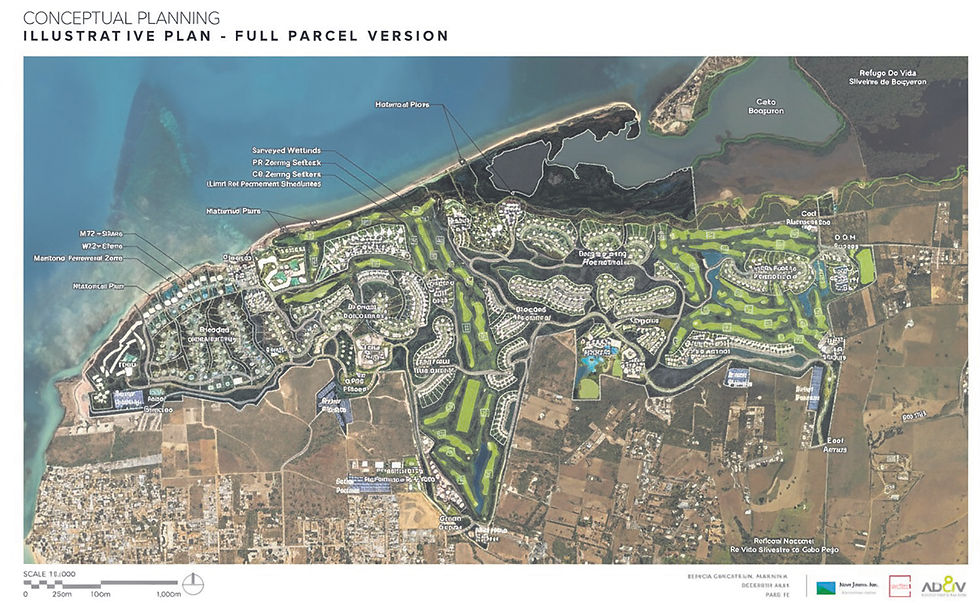
The development includes four public vehicular beach access points with sanitary facilities, support for recreational activities such as hiking, birdwatching, and mountain biking, and two “Towncenters” offering space for businesses and services, including gastronomic, recreational, cultural, religious, and other essential community services. OGPe asserts that the project will occupy less than 25 percent of the total land area—15 percent for building footprints and 10 percent for access roads and infrastructure. The remaining 75 percent is designated as green space, including landscaped areas, two golf courses, and conservation zones.
The determination comes despite strong opposition from Cabo Rojo communities, environmental organizations, and prominent scientists. Several government agencies also rejected the proposal, citing inadequate infrastructure to supply electricity, potable water, and wastewater treatment for the massive development. However, the Municipality of Cabo Rojo endorsed the project. In the EIS, the municipality acknowledged that some components conflict with the Land Use Plan but recommended measures such as implementing best engineering practices, rehabilitating sensitive areas impacted by past illegal activities, creating continuous ecological corridors, applying ecotourism design guidelines from the Tourism Company, and reserving 25-meter conservation strips along natural stormwater drainage channels.
The municipality also welcomed a reduction in the building footprint from 25 percent to 21 percent and requested that permanent structures maintain a minimum 50-meter distance from maritime-terrestrial zones, natural reserves, caves, and wetlands. Vehicular access roads must have a minimum width of 13 meters. Additionally, residential units must include restrictive clauses to prevent short-term rentals by owners, except through a complex or hotel administrator.
OGPe announced its determination this week via a newspaper notice. The document does not detail how the decision was reached but identifies Jaime Green Morales, Director of the Environmental Compliance Evaluation Division, as the responsible official. The project proponent is Cabo Rojo Land Acquisition. Plans include 530 hotel units, 1,132 tourist residences, commercial areas, golf courses, a school with 500 dormitories, medical services, and other infrastructure. The development spans 96 cadastral parcels totaling 6,088,514 square meters (1,504 acres / 1,549 “cuerdas”) and carries an estimated cost of $2.684 billion. It is projected to create 17,000 jobs during construction (direct, indirect, and induced) and 3,000 jobs during operation.
“This is yet another example of investors exploiting the benefits of Law 22 (now Law 60) and the unprecedented generosity of Governor Jenniffer González Colón’s administration and PNP governments. Under Pedro Pierluisi’s mandate, nearly $500 million in tax exemptions were granted to this project—$500 million that the Treasury Department will forgo—while Puerto Rico remains in bankruptcy,” reads a PIP press release signed by its three representatives.
During public hearings earlier this year, technical staff from the Department of Natural and Environmental Resources and the U.S. Fish and Wildlife Service openly opposed the Esencia project, citing irreversible adverse impacts on one of Puerto Rico’s most vulnerable zones, home to several endangered species. PIP legislators also criticized the timing of OGPe’s determination, arguing it was deliberately issued during the holiday season to shorten the practical 30-day period for scientific and community groups to respond. “The chosen date reduces the number of working days available for opponents to review and prepare arguments, given government office closures during holidays. This was done with premeditation and bad faith to favor Esencia,” stated Márquez, Gutiérrez, and Lebrón Robles.


Comments