


Teams rebounding and fouling their way to more possessions

By JOHN HOLLINGER / THE ATHLETIC
You can’t make an omelet without breaking a few eggs. That has increasingly become NBA teams’ mindset when it comes to chasing extra possessions and the potential costs of doing so.
Let’s back up a bit. With a bit more than a quarter of the season complete and most teams in a lull as the NBA Cup plays out, it’s a good time to exhale and take a look at some leaguewide trends.
One notable shift that stands out is that fouls and free-throw attempts have sharply increased from a year ago. Although this can change over the course of a season as players and officials react to one another — most notably in the “no paint fouls” era in the second half of the 2023-24 season — I suspect this one is likely to stick because it is driven by bigger stylistic changes that we are seeing leaguewide.
First, the data on fouls. Leaguewide free-throw attempts per field goal attempt are up by 14.8% from a year ago, to 0.279 this season from 0.243 a year ago; leaguewide fouls per 100 possessions are up 13.4%. That comes in the wake of a flat half-decade-long trend line in the post-COVID era.
The 2022-23 season, with a 0.266 free-throw rate and 20.0 fouls per team per game, stands out as something of an outlier, and 2023-24 was trending the same way before an abrupt reduction in fouls and free throws after the All-Star break. Still, even those seasons pale beside what we have seen in 2025-26. To have double-digit percent increases in foul rates in one season is a fairly extreme shift.
Pedants will note that pace is also up this year, which would affect personal fouls per game, but it’s only a 1.2% difference, and the foul rate has increased more than 10 times that amount. That isn’t the cause here.
What is? The first instinct is to blame the referees somehow, but that quickly leads to dead ends. I’ve been in a lot of arenas in the past month, and nobody is really talking about changes in the officiating this year. (As opposed to, say, March 2024, when everyone was talking about it.) To my own eyes, I haven’t seen play types officiated differently from previous years. And anecdotally, postgame officiating rants have been uncommon.
A more possible boogeyman would be the Oklahoma City Thunder, who nearly set a record for defensive efficiency last season while finishing 26th in opponent free-throw rate. The team that finished just behind them in the defensive statistics, the Orlando Magic, was 29th in opponent free throws.
What those two teams mastered was so-called possession-ball. Oklahoma City and Orlando forced heaps of turnovers and controlled the boards, limiting opponents’ field goal attempts.
The flip side of that is the Houston Rockets’ approach, which is to go nuts on the offensive glass and attempt to win the possession battle that way. This is basically a new paradigm in the NBA, replacing the previous 2010s orthodoxy of limiting rebounding attempts to avoid surrendering transition. This more aggressive approach has increased offensive rebound rates across the league. (Well, except in Milwaukee.)
Teams have also leaned into using ball pressure to generate more turnovers. That’s a direct response to the ridiculous efficiency some modern offenses have achieved if they’re just allowed to play pop-a-shot and to the increased physicality allowed on the perimeter since the middle of the 2023-24 season.
Perhaps as a reaction to the success of teams like the Thunder, Magic and Rockets, offensive rebounds and turnovers are way up this year. The leaguewide offensive rebound rate this season is 26.2%, and the leaguewide turnover rate is 13.0%. The rebound rate has jumped 8% just in the past two years and 18% from the league’s ebb of a 22.2% rebound rate in 2020-21. The turnover rate this season has not been exceeded in the past decade and is a 7.4% jump from last season.
Some individual teams have been wild outliers: Oklahoma City and the Phoenix Suns are turning teams over on more than 15% of their possessions, and Houston has an unthinkable 38% offensive rebound rate.
So back to our omelet: Possession-ball is not possible without fouls, and often fouls on both sides. Increasing offensive rebound attacks also increases the number of contested rebounds, which adds to the number of loose-ball fouls in both directions. One sight that has been especially common, however, is a referee on the baseline blowing the whistle, raising both arms and then pointing at the floor in an exaggerated “stays here” motion after the defense fouls an opposing offensive rebounder.
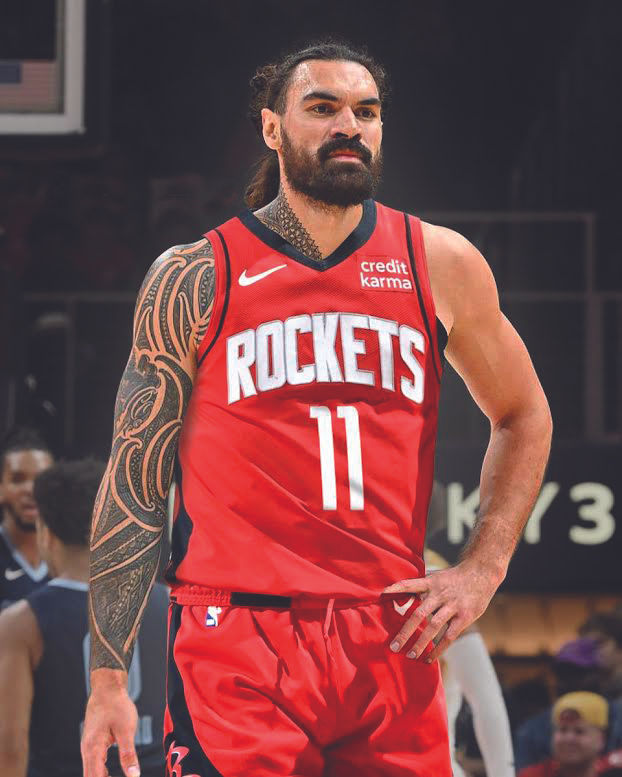
This happens nearly every game with the Rockets’ Steven Adams, whose 25.4% offensive rebound rate leads the league among players with at least 300 minutes played; Adams is drawing fouls and earning free throws without even touching the ball.
Of course, that’s only a part of it. Put-backs, as a shot type, also tend to generate a lot more shooting fouls than jumpers, putting even more pressure on the leaguewide foul rate.
The same applies to a lesser extent with ball pressure. Not only does it increase the risk of fouls 50 feet from the basket (in theory, at least, although the league has been reluctant to call all but the most egregious hand checks), it also increases the possibility of offensive fouls from frazzled dribblers.
Which takes us to the next question: Are foul rates about to escalate even more? It’s a copycat league, and the copying seems to be working. As much as teams like the Rockets have rediscovered the value of crashing the glass to their offenses, many are seeing that the foul-turnover trade-off seems to favor the defense.
It’s not just the Thunder. The Detroit Pistons, for example, have the league’s third-best defense despite the worst opponent free-throw rate; they are third, however, in opponent turnover rate at 14.6% and second in offensive rebound rate at 31.5%. Phoenix has been less extreme, but it’s another surprise team that has benefited in a big way from owning the possession war despite a high foul rate. (The Thunder, I will note, have dialed back the fouling quite a bit in 2025-26; they are now just awesome at everything.)
Again, we have seen the ebbs and flows of leaguewide trends pivot before; the NBA could decide to call the game differently, or other factors we can’t even conceive of yet could persuade teams to tilt their focus in a different direction. Nonetheless, the possessions-and-fouls shift is one of the most notable stylistic changes we have seen in the league this season. Now the question, for the last three-quarters of the season, is whether the trend accelerates from here.


