


Trump announces a deal on drug prices with AstraZeneca
- The San Juan Daily Star

- Oct 14, 2025
- 4 min read

By REBECCA ROBBINS and MARGOT SANGER-KATZ
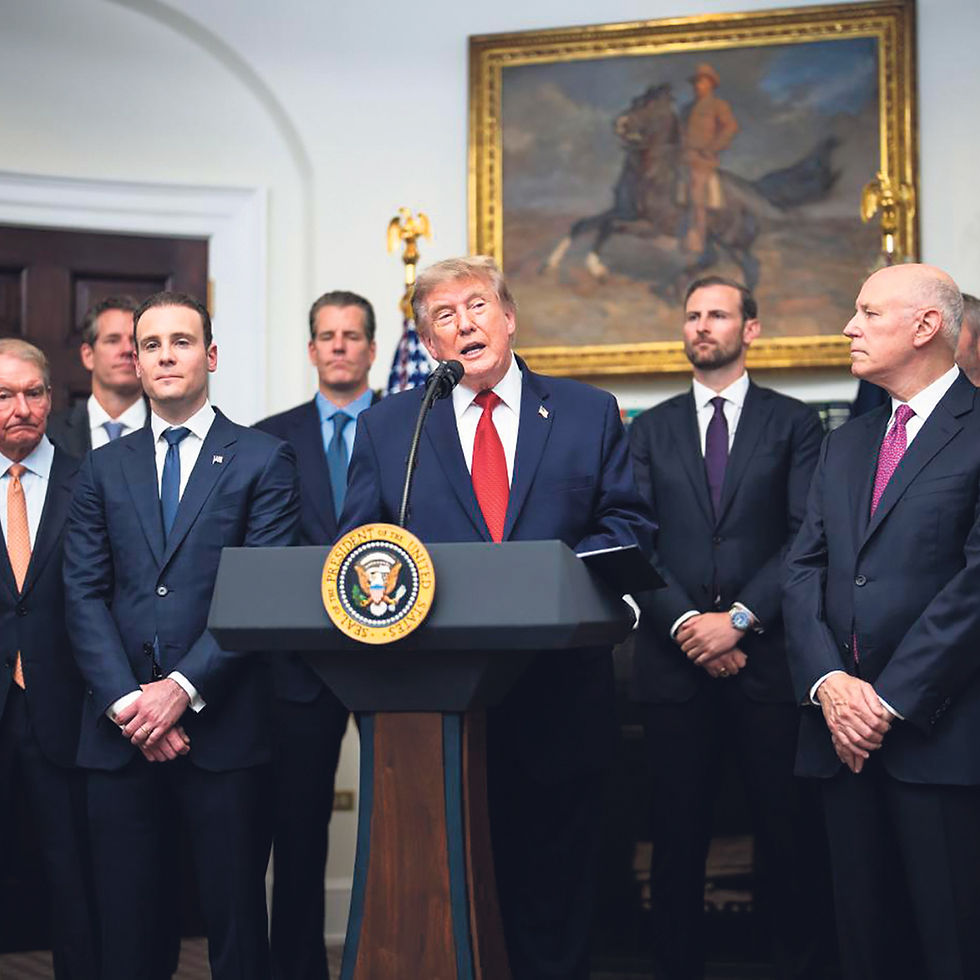
President Donald Trump late last week announced a deal with British drugmaker AstraZeneca to lower drug prices, his second pact with a major pharmaceutical company in an effort to make prescription drugs more affordable.
Under the deal, AstraZeneca agreed to sell its drugs to Medicaid, the health insurance program for lower-income Americans, at about the same prices that it offers to wealthy countries in Europe.
The agreement, along with one with Pfizer last week, is the product of a Trumpian brand of horse-trading. For months, the president has threatened to impose tariffs on imported medicines, demanding that drug companies lower prices and bring manufacturing back to the United States. Drugmakers have been eager to find ways to dodge much more aggressive action that could cut deeply into their profits.
The nation’s top health officials publicly acknowledged Friday that Trump’s tariff threats were the leverage needed to persuade powerful drug companies to expand and build new U.S. plants as well.
“Now, I’m not sure that Pascal would like to say — but behind the scenes, he did say, tariffs were a big reason he came here,” Trump said, referring to AstraZeneca CEO Pascal Soriot, who stood beside him at Friday’s announcement in the Oval Office.
AstraZeneca and Pfizer both revealed that their new pricing arrangements with the White House guaranteed them a three-year reprieve from any tariffs the Trump administration would impose on the products they produced overseas. The Trump administration has threatened to impose tariffs of up to 15% on brand-name drugs from the European Union and 100% from other parts of the world, but it has delayed those from a deadline of Oct. 1.
Still, it is unclear whether Trump’s deals would significantly lower Medicaid’s drug prices. In many cases, the prices that Medicaid pays are already similar to those in Europe, experts said. And the AstraZeneca agreement involves only a small share of the company’s U.S. sales.
At his Oval Office news briefing, Trump promised, without evidence, “We’re going to bring drug prices down at numbers that nobody ever thought possible.”
The two deals so far do not affect the bulk of prescription drug coverage. AstraZeneca made no commitment to lower prices for drugs it currently sells for U.S. employers, insurers and other government programs like Medicare, which shoulder most of the costs of drugs in the United States.
Brand-name drug prices in the United States are three times as high, on average, as those in peer nations. But the disparities vary across types of insurance. Drugmakers already give Medicaid lower prices than other payers in the United States because of discounts that are required under federal law.
People on Medicaid already pay almost nothing in out-of-pocket costs. Federal law caps those costs at $8 per prescription for people with the lowest incomes. In some states, people with Medicaid have no out-of-pocket costs.
The voluntary approach stands in contrast with Trump’s first term, when he tried to mandate lower drug prices through regulation and other forms of formal public policy. President Joe Biden secured legislation to regulate drug prices in Medicare.
The new deals are occurring while Trump and Republicans in Congress have been wrangling with Democrats over whether to extend Obamacare subsidies that help cover the costs of health insurance for more than 20 million Americans. Democrats have seized on the issue as a way of criticizing the Trump administration for raising Americans’ health care costs. Trump has argued that his deals over drug prices will help more consumers.
At Friday’s event, officials touted a website, TrumpRx.gov, which would help patients use their own money to buy drugs, sidestepping insurance.
The online drugstore would act as a landing page to send American patients to direct-sales websites offered by various drugmakers. Officials put up a promotional version of the website Friday and said it would be up and running next year.
Trump said the TrumpRx name had not been his idea.
AstraZeneca recently set up a website that will be part of TrumpRx where patients can use their own money to buy several of the company’s drugs. It includes Farxiga, for diabetes, kidney disease and heart failure; Airsupra, an asthma inhaler; and FluMist, a nasal flu vaccine recently authorized for home use. The company plans to expand the website to include other primary care drugs.
That website may be helpful in certain circumstances, but most insured patients pay less in out-of-pocket costs than they would pay for the drugs directly. For example, some patients can buy a month’s supply of Farxiga for $182 on AstraZeneca’s site, while their copayment may be only $25 if they use insurance.
In the United States and Europe, drug prices are determined through negotiations. The talks between drug companies and representatives for payers result in confidential discounts that lower the final price that European countries and American employers and government programs pay for a medicine.
Administration officials have been floating the idea that for newly introduced drugs, drugmakers like Pfizer and AstraZeneca would match their U.S. and European prices even after those confidential discounts were taken into account. The Trump administration did not explain how that would work.
As a practical matter, it is nearly impossible for a drugmaker to commit to doing that. A key reason that European governments receive bigger discounts is that they are more willing to walk away from negotiations if a price is too high, denying their citizens coverage of that medication.
In July, Trump sent letters to 17 of the largest drugmakers, including AstraZeneca, asking them to lower some of their prices.
Like other large multinational drugmakers, AstraZeneca has long had a presence in the United States, its most important market. The company has moved recently to strengthen those ties.
AstraZeneca already makes most of the products it sells in the American market in the United States. In July, AstraZeneca said it planned to spend $50 billion over the next five years building and expanding factories and research facilities in the United States.
On Thursday, the company held a groundbreaking ceremony for one of those manufacturing investments, at a site in Virginia that it said would help manufacture drugs for cancer, weight loss and blood pressure.
AstraZeneca said last week that it planned to list its shares on the New York Stock Exchange next year, though it will remain headquartered in Britain and listed in London and Stockholm.

This 32 Hour DWI Intervention Class, also known as the DWI Repeat Offender Program, is specifically designed for individuals who have been convicted more than once of driving while intoxicated, leading to the suspension of their driver’s license Texas DWI Intervention Program .
This is such an informative piece! 리본티켓 공식 I really appreciate the clear writing and thorough coverage of the topic. Keep up the excellent work!