Trump presses on with tariffs despite court, and court of public opinion


By SHANE GOLDMACHER and KATIE GLUECK
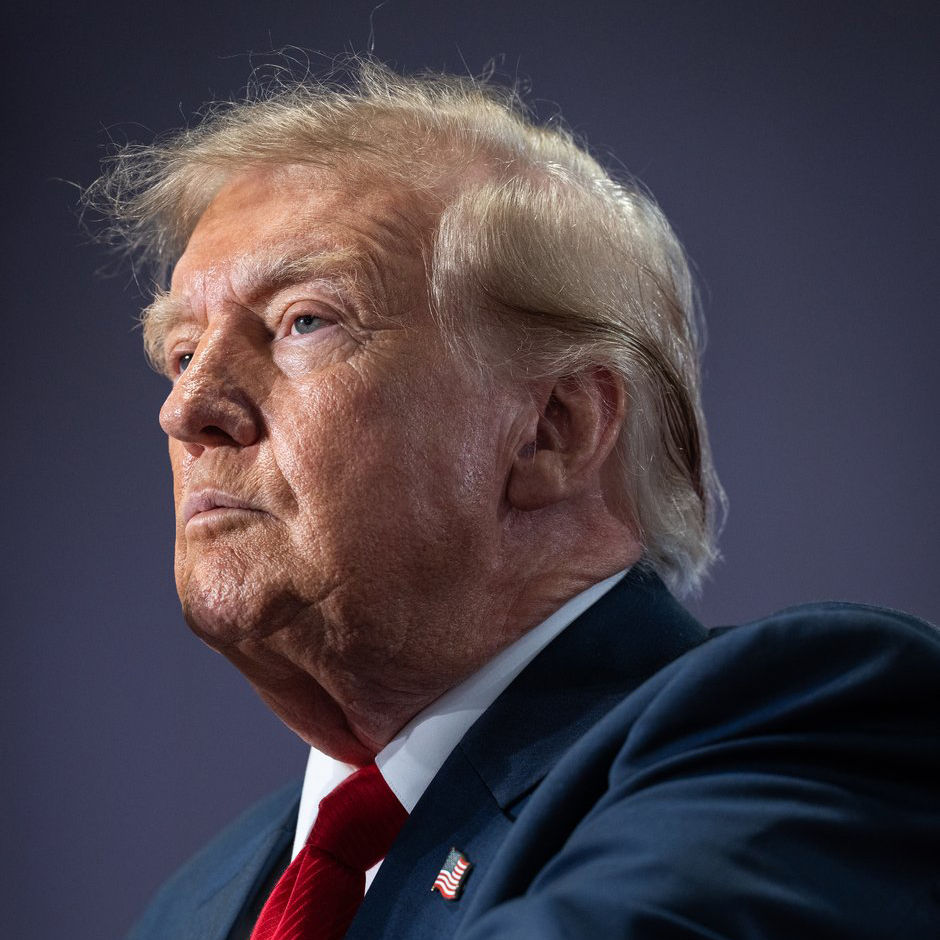
President Donald Trump’s defiant response to the Supreme Court decision striking a blow against his signature economic tool pushed the Republican Party further down an uncomfortable path of defending tariffs that are unpopular with the public.
Lashing out at the majority of justices who ruled against him as “fools and lap dogs,” Trump dismissed the most sweeping judicial rebuke of his second term Friday as little more than a technicality as he vowed to plow ahead with new, across-the-globe tariffs using a different law.
“We have very powerful alternatives,” Trump declared, announcing a new 10% import tax. “For those who thought they had us.”
On Saturday, Trump said he was raising his new global tariff to 15%.
Yet the painful political reality for Republicans, even those allied with the president, is that his tariff regime has proved deeply unpopular. Some privately lamented that Trump had missed a chance to walk them back before a midterm election expected to turn heavily on the economy, instead recommitting to a policy that divides his party.
“It was bad policy,” Rep. Don Bacon, R-Neb., who has clashed with Trump on the issue of tariffs and other matters, said in an interview. “It’s also bad politics.” (Bacon is not seeking reelection.)
A majority of Americans and 58% of independent voters opposed Trump’s tariffs, according to a New York Times/Siena University poll released last month. At a moment when the top issue for voters is the cost of living, Republicans are waging an uphill battle defending tariffs on imports that economists have repeatedly said ultimately result in higher prices for consumers. A Fox News poll last month showed that tariffs ranked among Trump’s worst-performing issues.
Trump loves tariffs anyway. He insists the economists are wrong. Import taxes are so close to his heart that he has frequently called “tariff” his favorite word in the dictionary, and he has been talking up the importance of trade deficits for decades. As president, he has deployed tariffs as a foundation of both his economic and foreign policy agendas.
“This was an important case to me,” Trump said Friday.
Some Republicans had been hopeful in the immediate aftermath of the ruling that it might take some of the political pressure off them and ease rising prices.
Trump dashed those hopes almost immediately.
Politically, the damage from tariffs might already be done in the minds of voters who disagreed with the policy, some Republican strategists suggested.
“The impact that tariffs have had on Americans doesn’t disappear simply because they may have ended,” said Neil Newhouse, a Republican pollster. “This action by the Supreme Court should not be thought of as throwing the GOP a life preserver for November.”
For months, Democrats have blamed Trump’s on-again, off-again tariffs for destabilizing the economy and worsening “the affordability crisis,” as Rep. Hakeem Jeffries, D-N.Y., the House minority leader, put it. Now they can also say the tariffs broke the law.
Govs. Gavin Newsom of California and JB Pritzker of Illinois, two Democrats considered potential 2028 presidential candidates, both demanded refund checks for families in their states who had to pay more for imported goods in recent months after the court ruled Trump’s tariffs were unconstitutional.
“Cough up!” Newsom said in a statement.
The 2026 elections were already shaping up as a referendum on Trump and his stewardship of the economy — a dynamic he knows well. Trump won in 2024 after relentlessly attacking then-President Joe Biden for his management of the economy and rising inflation.
Strategists in both parties said the Supreme Court’s rejection of a centerpiece of his economic agenda would only sharpen that focus, even if voters are unlikely to be swayed by any debates about separation of powers.
“Any political impact won’t come from the court’s reasoning,” said Chris Wilson, a Republican pollster. “It will come from whether voters feel stronger or weaker economically.”
The tariff fight also thrusts to the fore an issue that divides the Republican Party, whose elected leaders had been ardently in favor of free trade until Trump’s arrival.
“Congress’ role in trade policy, as I have warned repeatedly, is not an inconvenience to avoid,” Sen. Mitch McConnell of Kentucky, the former Republican leader, said in a scathing statement after the ruling. Former Vice President Mike Pence hailed the ruling, saying, “American families and American businesses pay American tariffs — not foreign countries.”
Others, such as Sen. Bernie Moreno, R-Ohio, a Trump ally, pushed for Congress to codify Trump’s powers to impose tariffs. “This betrayal must be reversed,” he said in a statement on the ruling.
Trump said Friday that he had authority to impose tariffs himself. But one statute that he planned to invoke to put in place the new global tariff imposes a 150-day limit, unless Congress votes to extend them.
Jason Roe, a Michigan-based Republican strategist who has worked on House races, said letting the court roll back tariffs would have been one of the few things that the Trump administration could have done to almost immediately address rising costs, especially in a state like his, which has deep economic ties to Canada.
He added that making Republican lawmakers vote in favor of more tariffs in the coming months would be risky.
“If we’re not seeing measurable reductions in how people feel about the cost of living between now and November,” Roe said, “putting Republican members of Congress out to vote for higher tariffs is making them culpable for those higher costs politically.”